
A colour with many shades
Pink roses cover a wide range, from the faint blush of an old garden rose to hot cerise. In the language of flowers, pink traditionally signals gratitude, admiration and gentle affection, which makes it a safe pick for a thank-you or a birthday.
From china roses to modern hybrids
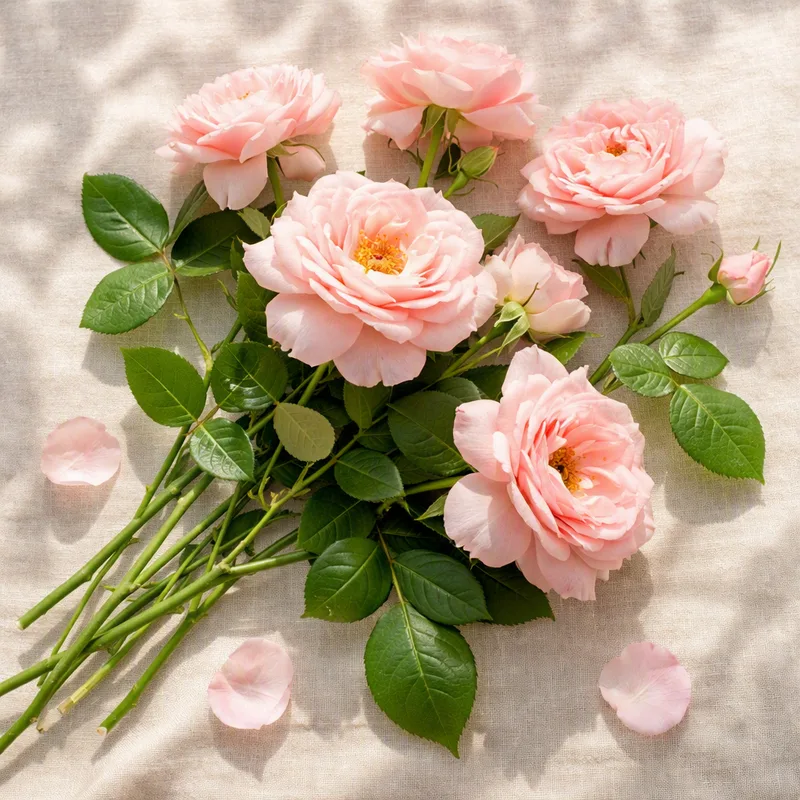
Many pink roses come from Chinese varieties that reached Europe in the 1700s. Those parents contributed repeat flowering and a soft colour range that breeders still draw on. Old roses are often more fragrant, while modern hybrid teas offer long stems that suit the vase.
Looking after pink roses in warm weather
- Pale pinks can bleach in strong sun, so a spot with afternoon shade protects the colour.
- Water deeply at the base of the plant, ideally early in the morning.
- Mulch to keep the roots cool through summer.
- Feed with a rose fertiliser in spring and again after the first flush of flowers.
Arranging pink roses
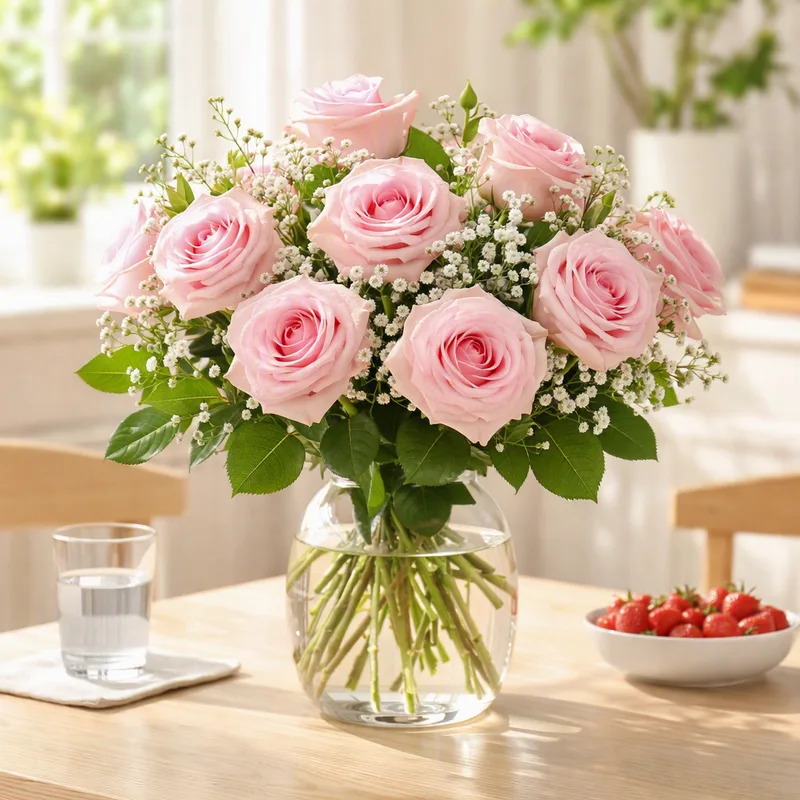
Pink pairs easily with white, cream and greenery. For a more modern look, combine it with deeper reds or even purple. Stems should be recut and put straight into clean water.
In autumn, from March, many pink roses produce a second flush in richer colour as the nights cool. Pick blooms early in the morning, when the stems are full of water, and put them straight into a bucket of cool water.
Pink roses and animals
Roses are classed by the ASPCA as non-toxic for dogs, cats and horses, but the prickles can hurt. Pick up fallen petals if a pet likes to chew.