
Bulbs that expect a cold start
Tulips (genus Tulipa) come from regions with cold winters and dry summers, so they sit awkwardly in much of Australia. Gardeners in Melbourne, Canberra, Hobart and the highlands can plant bulbs in autumn, around April and May, and expect flowers in September and October. In warmer places such as Sydney and Brisbane, growers usually chill the bulbs in the crisper drawer for several weeks before planting, and many treat them as a one-season display. In the tropical north they are not a garden plant at all.
Reading the shades of yellow
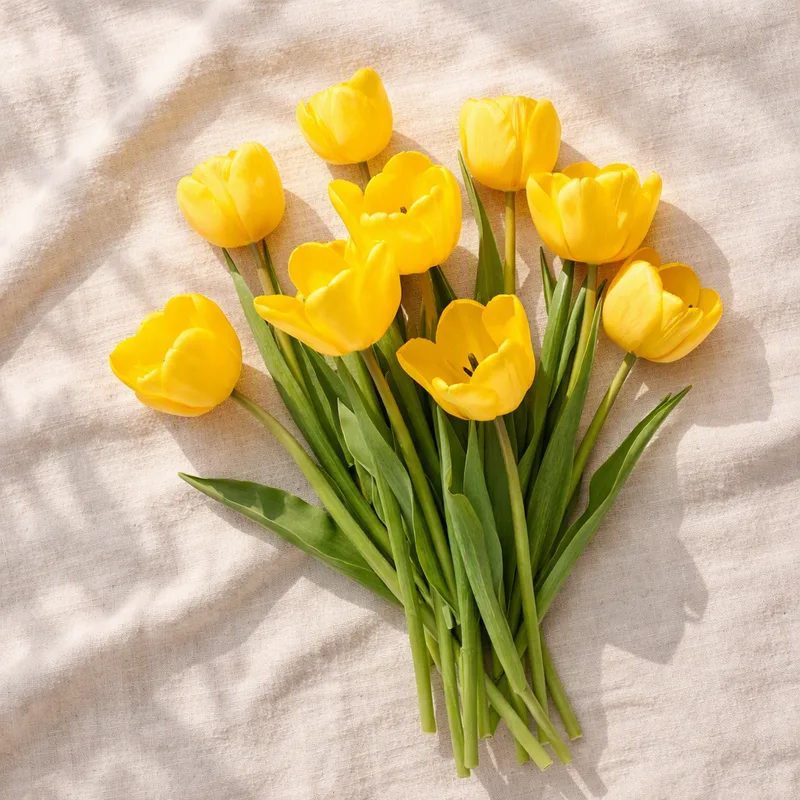
Yellow is not one shade. It runs from soft lemon to buttery gold, and the flower shape changes the mood:
- Single early and Darwin hybrid types are rounded and sturdy, with strong stems of about 25 to 60 cm.
- Lily-flowered types have pointed, flared petals and look graceful in a tall vase.
- Double late types resemble peonies and suit a short, full arrangement.
In the language of flowers, a yellow tulip has been linked with cheerful thoughts and sunshine, which is why it turns up at spring birthdays and Easter tables.
Keeping stems in good shape
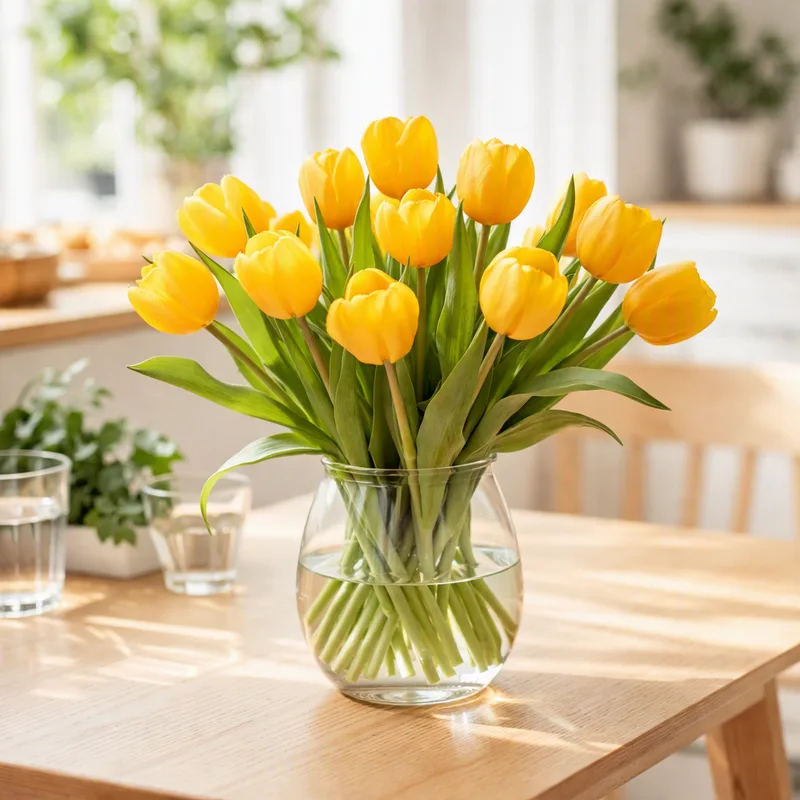
Tulips keep growing after they are cut and bend towards the light, so a tall vase gives them support. Trim the stems on an angle, remove leaves below the waterline and use cool water. Keep them away from a sunny windowsill and from fruit bowls. Expect roughly five to ten days. Leave daffodils in a separate vase, because their sap harms tulip stems.
Bulbs, paws and hooves
The ASPCA lists tulips as toxic to dogs, cats and horses, with most of the tulipalin A and B in the bulb. Signs include vomiting, drooling and diarrhoea. Store bulbs where animals cannot dig them up and call a vet if a pet has chewed any part.