


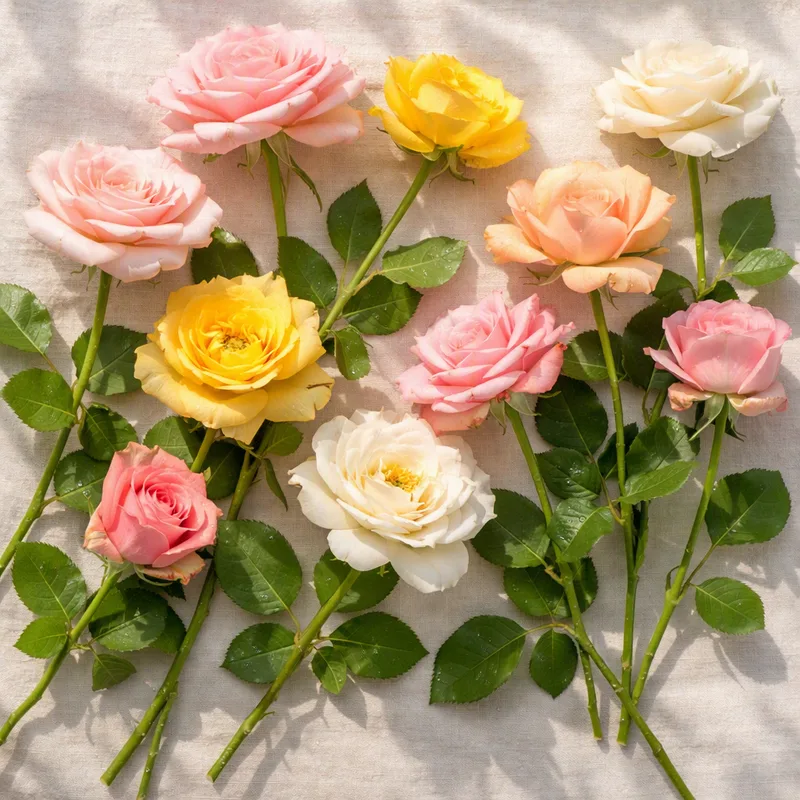
Hundreds of wild species, thousands of garden roses
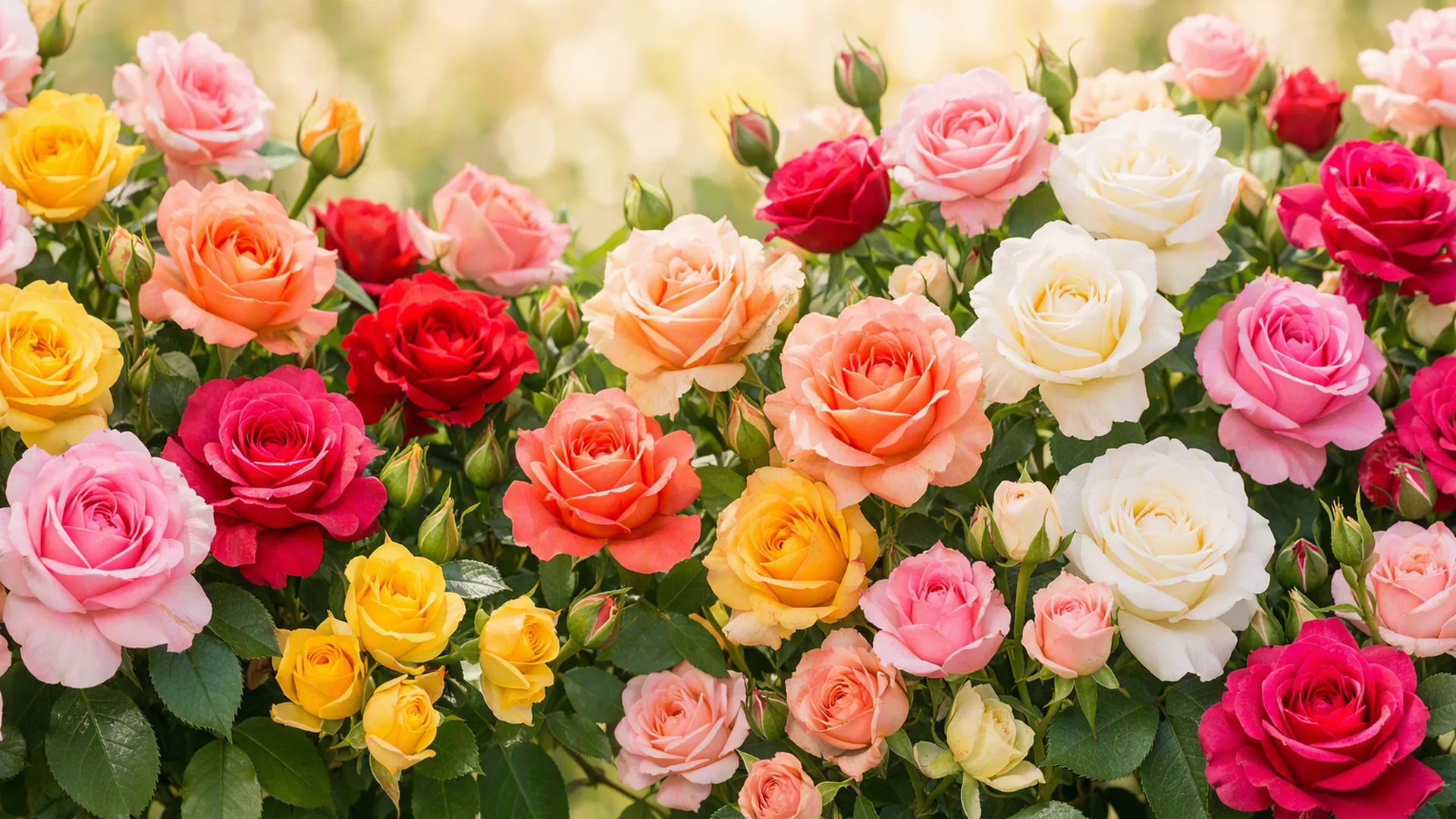
Rosa is a genus of woody, mostly prickly shrubs and climbers, with hundreds of wild species and many thousands of cultivars bred from them. The garden rose you know is a blend of several ancestors. Roses from China brought the habit of flowering more than once a season, which is why a modern bush can keep producing blooms from spring through to autumn.
Not every rose is a welcome guest here. Sweet briar (Rosa rubiginosa), an old European hedge rose with apple-scented leaves, has escaped into pastures and bushland in parts of southern Australia and is treated as a weed in those places.
Prickles, not thorns
Botanists call those sharp points prickles, because they grow from the skin of the stem and can be snapped off cleanly. True thorns are modified branches. Cut stems are usually stripped of their lower prickles and leaves before they go in a vase.
Planting and pruning on the southern calendar
- Bare-rooted roses go in during winter, roughly June to August.
- Pruning is a late-winter job, once the worst frosts have passed.
- Roses love sun and airflow; damp, still air invites black spot and powdery mildew.
- Water at the base of the plant in the morning rather than wetting the leaves.
Dry Mediterranean-style climates such as Adelaide and Perth suit roses well, while warm humid coasts call for disease-resistant varieties and good spacing.
Roses reward a little attention at flowering time. Snipping faded blooms back to the first healthy leaf encourages new buds, and a layer of mulch about five centimetres deep keeps summer heat off the roots. The hips that follow on many species roses are rich in vitamin C and were once gathered for syrups.
What the ASPCA says about roses
According to the ASPCA, the rose is non-toxic to dogs, cats and horses. The prickles can still scratch a curious nose or paw.