
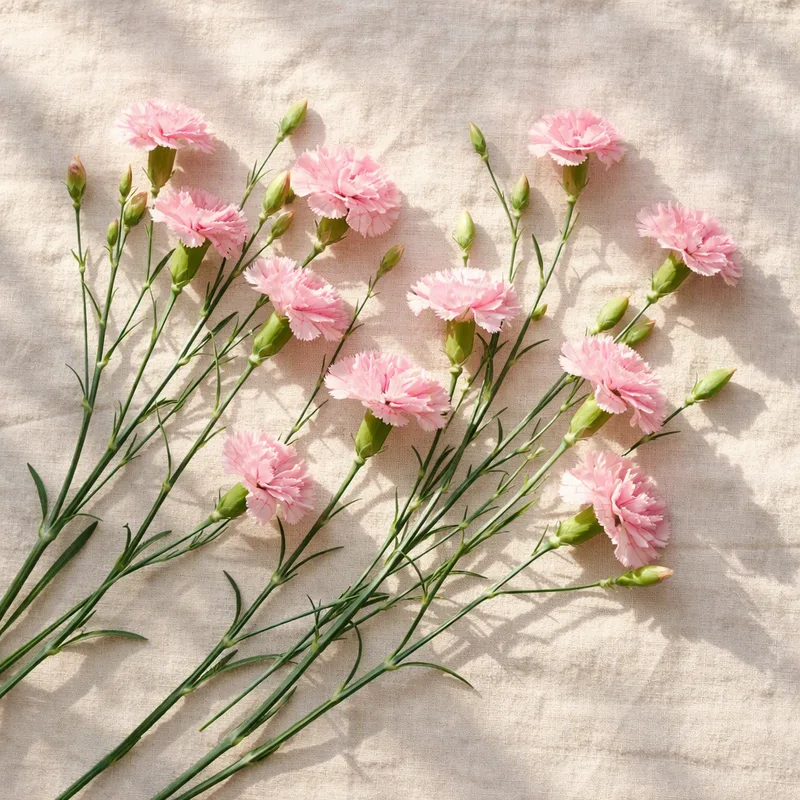
A colour with a legend
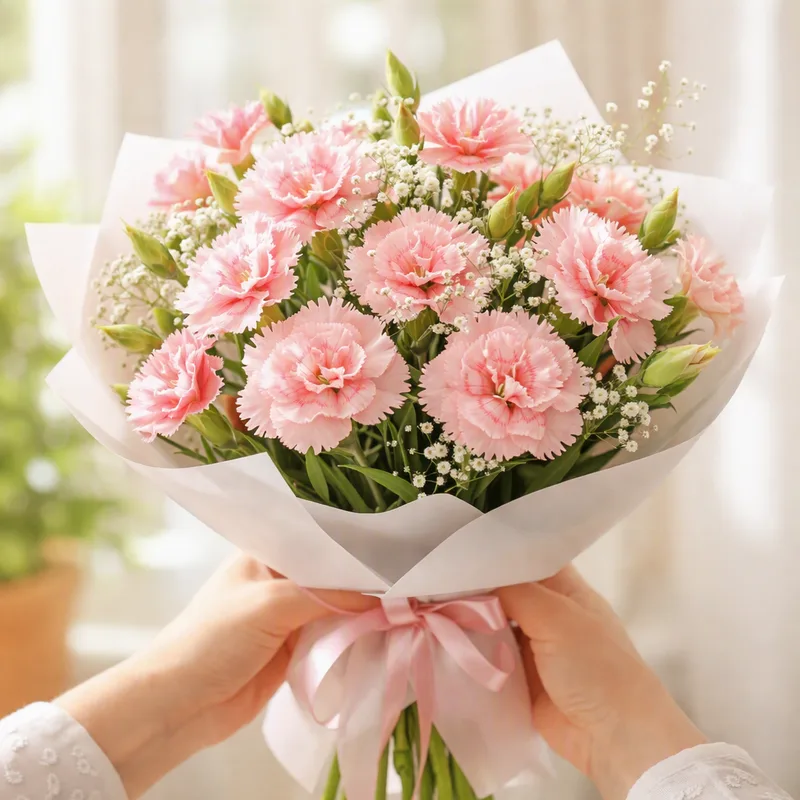
According to a Christian legend, pink carnations first sprang up on the spot where tears of the Virgin Mary fell on the road to Calvary. That story is why the flower is linked with a mother's love, and in the language of flowers a pink carnation has traditionally meant "I will never forget you". It is a gentle message, and it explains why pink is the most common carnation sold in spring for a mother.
Pink for Mother's Day in Australia
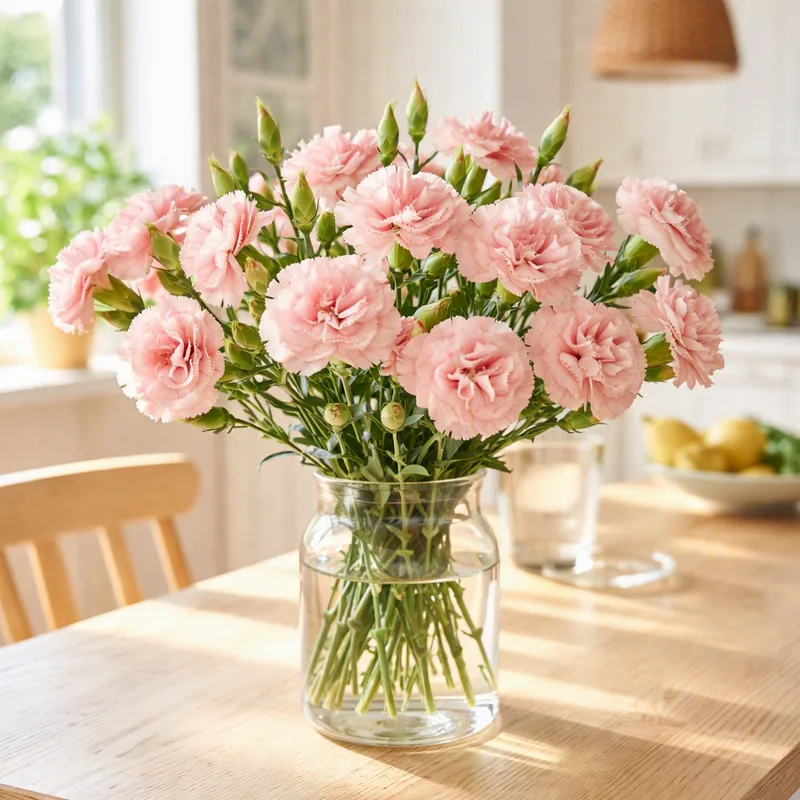
Mother's Day here falls on the second Sunday in May, in autumn. Chrysanthemums are the local tradition, with the saying "mums for Mum", but pink carnations fit naturally into the same bunch. Their ruffles contrast with the round head of a mum, and both last well. A mixed vase of the two can stay fresh for around two weeks.
Pinks in the garden
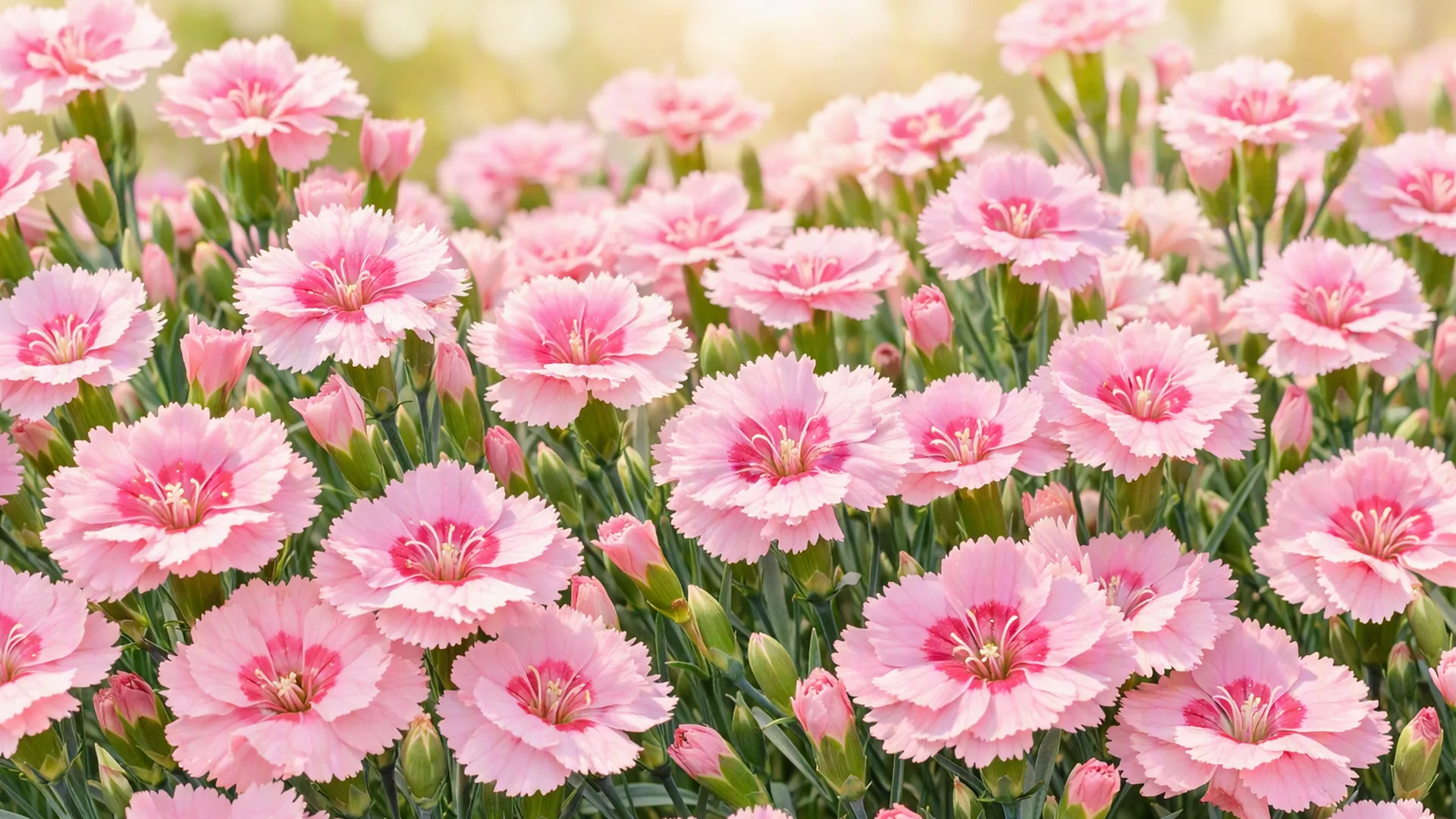
Garden pinks are the scented, low-growing form of Dianthus and the most popular pink-flowered carnation relative. They want sun, sharp drainage and soil that is neutral to slightly alkaline. Add a little garden lime if your soil is acidic, and water at the base to keep the foliage dry.
- Cool-temperate gardens in Victoria, Tasmania and Canberra: plant in early spring.
- Dry-summer areas like Perth and Adelaide: they cope well.
- Humid tropics: grow in pots, with good air movement.
Around cats and dogs
The ASPCA rates carnation as toxic for dogs, cats and horses, with mild effects such as stomach upset. Keep the vase out of reach of nosy animals.