How red can rudbeckia get
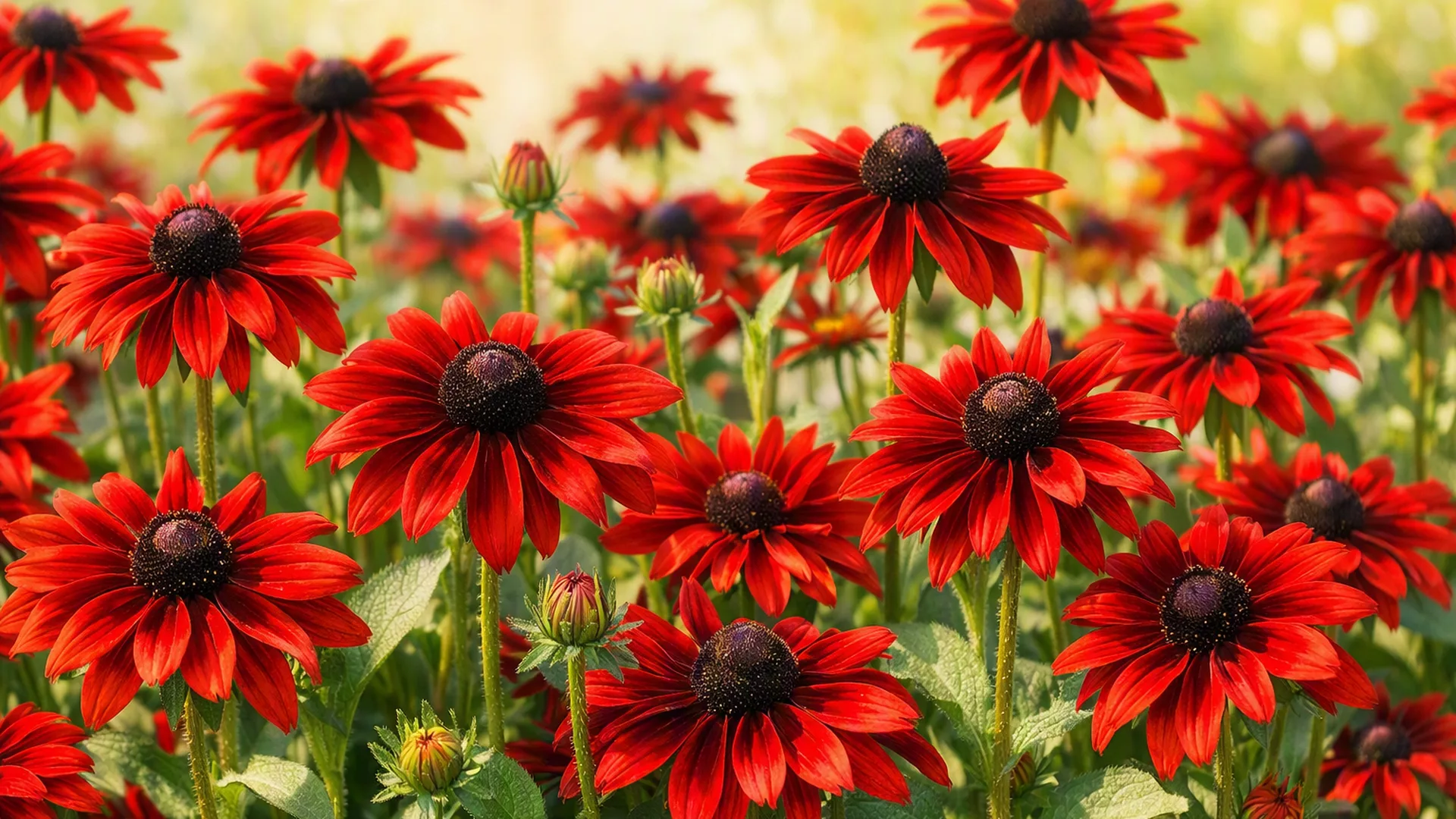
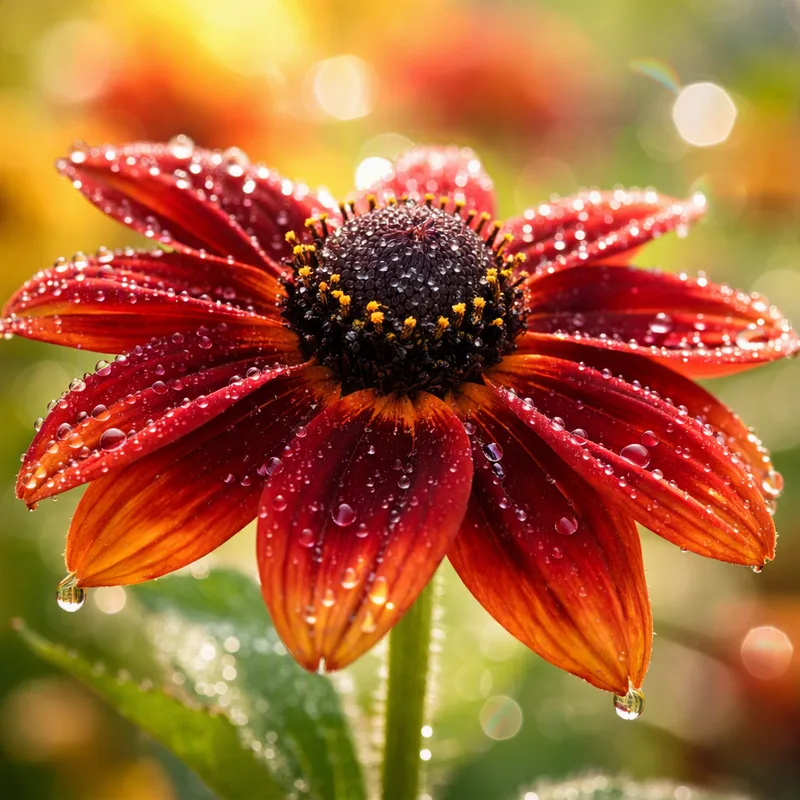
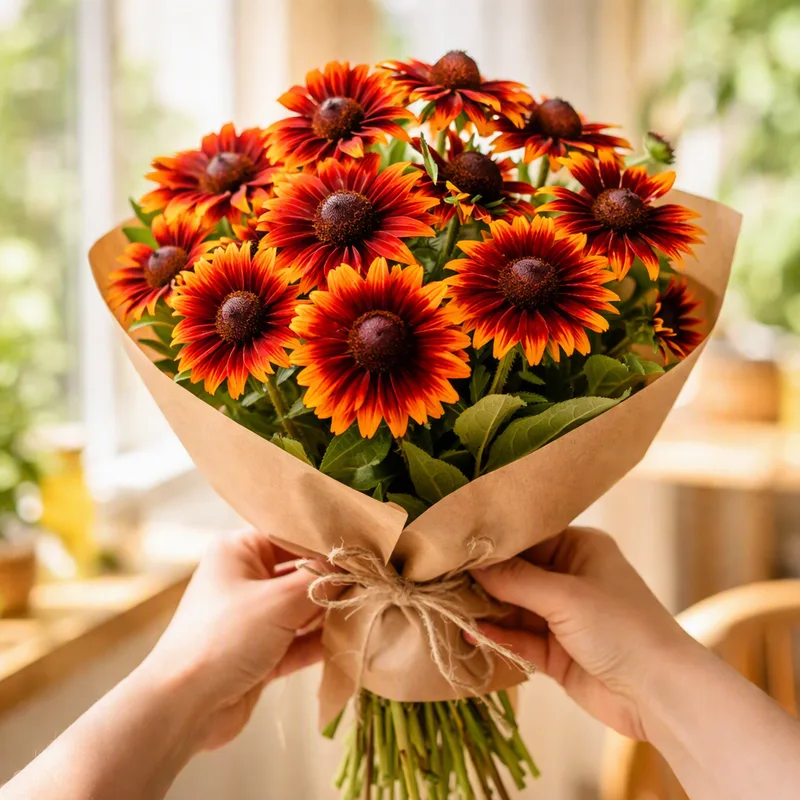
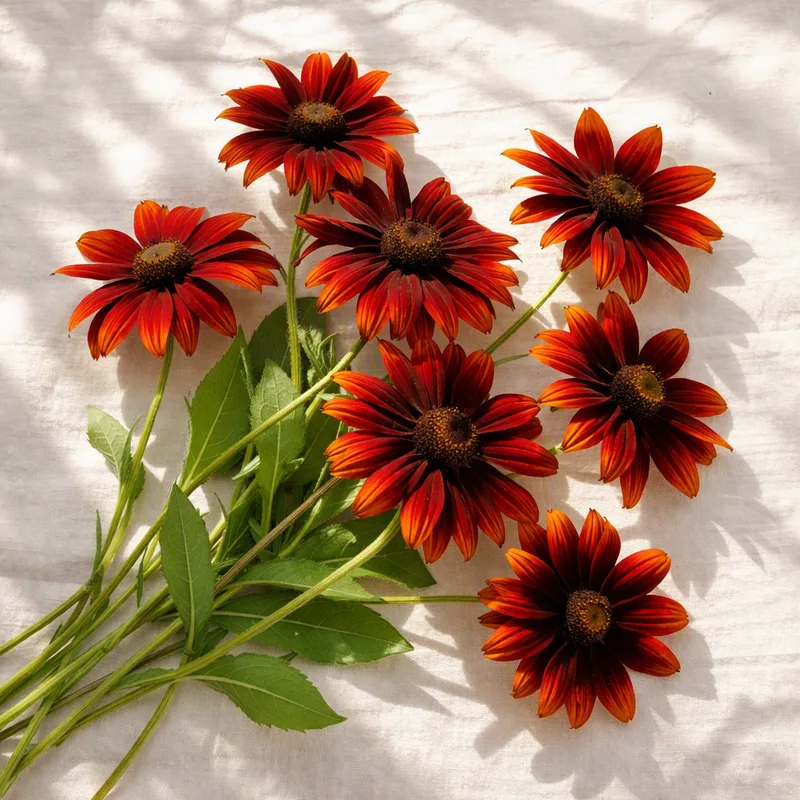
The classic rudbeckia is golden yellow with a dark cone. Breeders have produced forms with red-brown, mahogany or cherry petals, usually in Rudbeckia hirta, such as the cultivar Cherry Brandy. These are deep red-brown rather than a bright red, and many have a yellow edge or a darker ring near the centre.
Hot borders for red-brown daisies
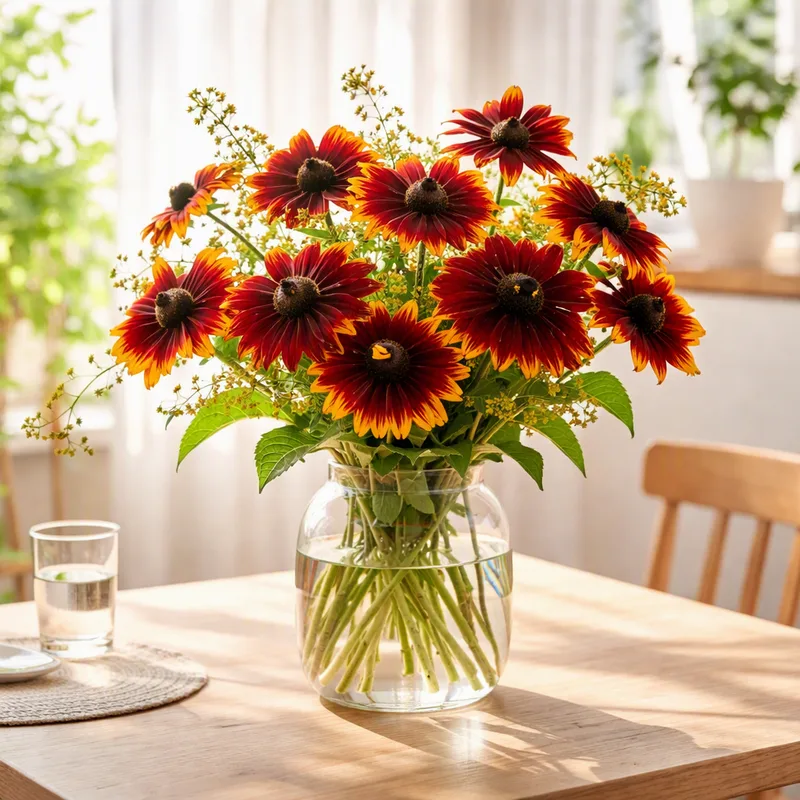
Red-toned rudbeckias suit a hot, sunny border in late summer, when their warm colour echoes autumn. Combine them with orange helenium, golden grasses or purple salvias. They also make a good strong note in cut-flower bunches, where deep red-brown petals set off bright yellow sunflowers.
Growing red rudbeckia
Rudbeckia is native to North America, so it enjoys full sun and handles Australian summers if watered. Sow seed in spring after frost has passed, or plant seedlings in spring. In cooler districts, flowers open from about January to March.
- Give regular water in dry weather.
- Provide airflow to reduce mildew in humid conditions.
- Remove old heads to extend flowering.
- Expect plants to be short-lived if they are Rudbeckia hirta types.
Vase life and garden animals
Stems last roughly a week in water. Leave some flower heads in the garden for birds in late summer.
Rudbeckia does not appear on the ASPCA list of toxic plants, so serious problems are unlikely, but a vet is the right call if a pet chews a lot of any garden plant.
Rudbeckia belongs with Echinacea, Dracopis and Ratibida among the coneflowers, and all of them are North American natives.