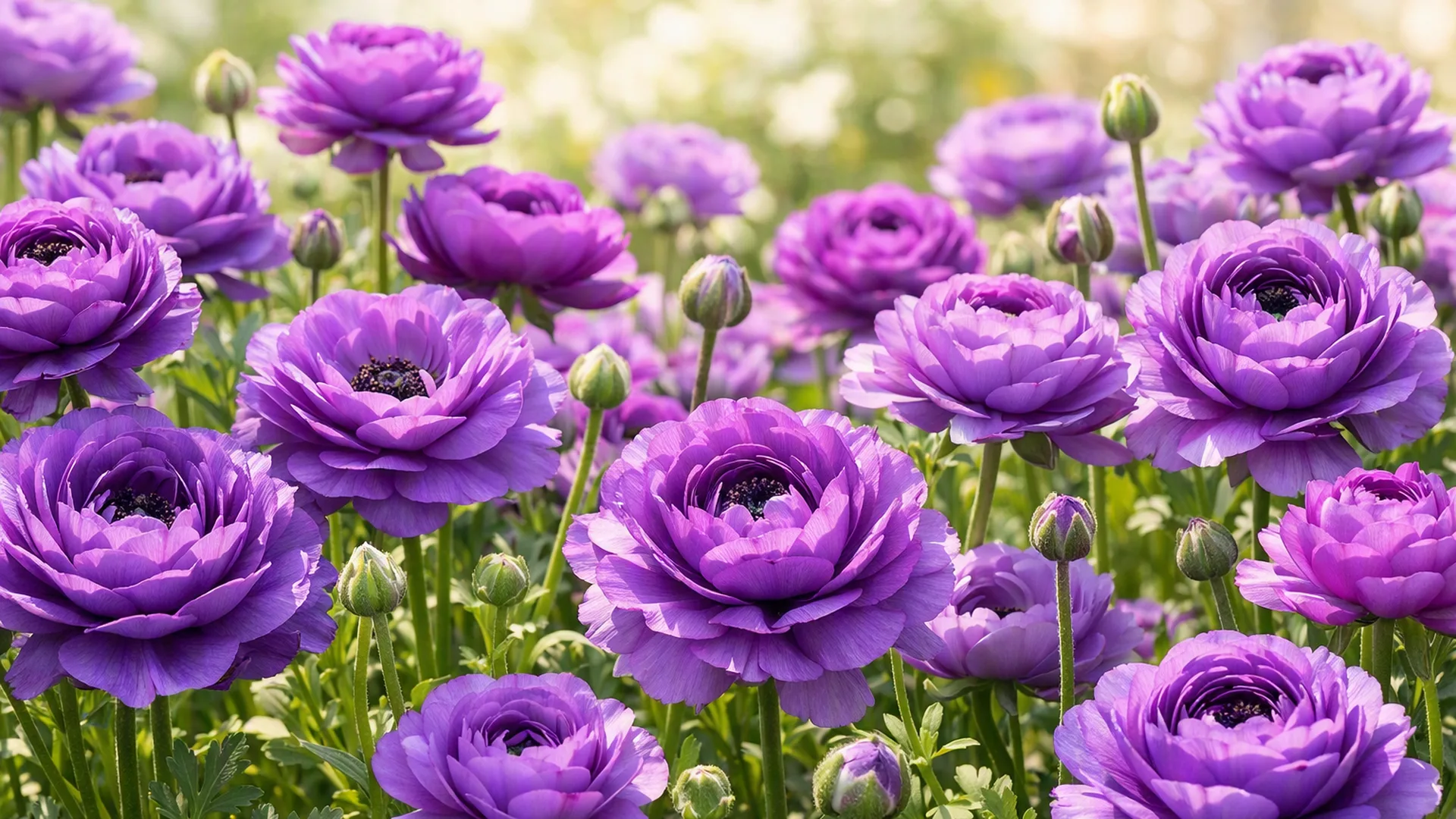
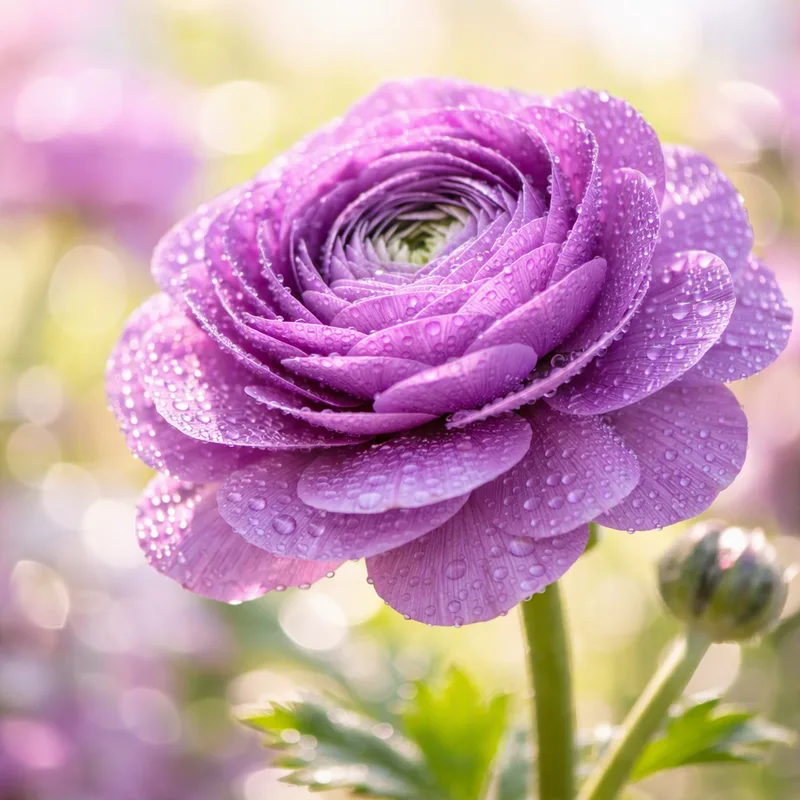
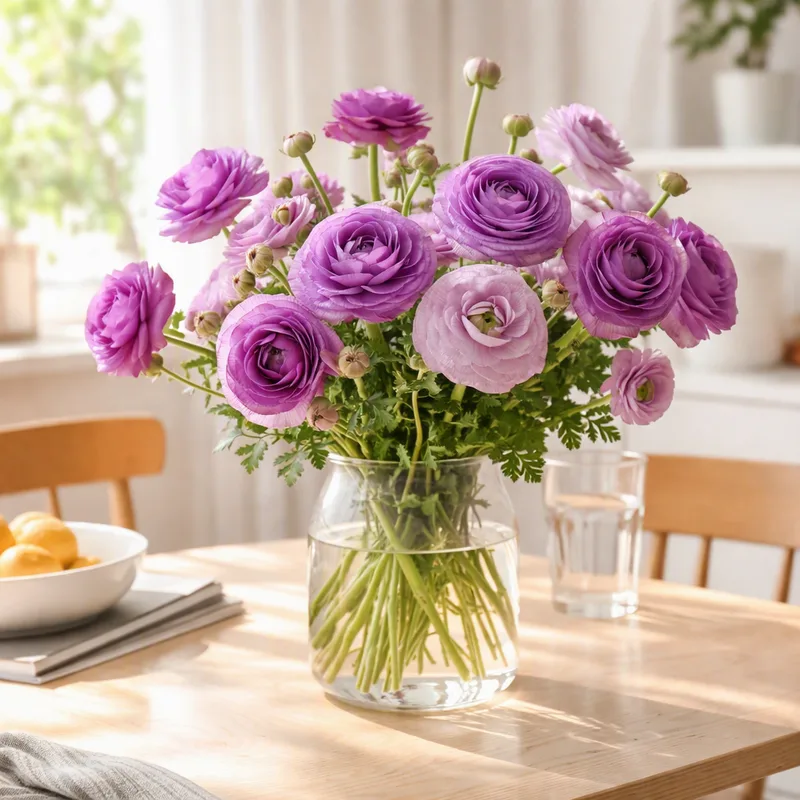

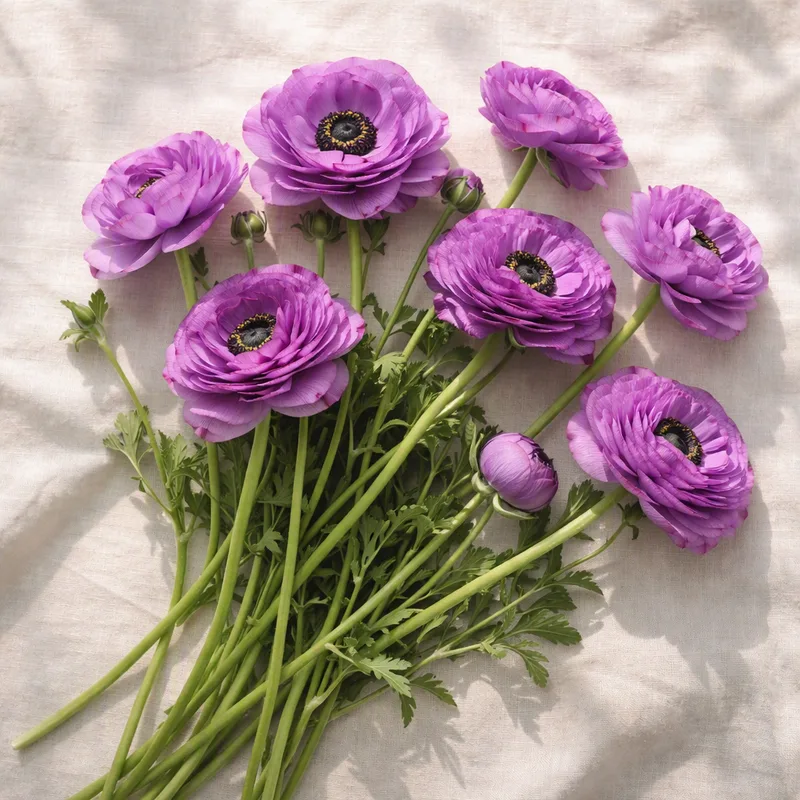
The garden ranunculus is Ranunculus asiaticus, the Persian buttercup. It is native to the eastern Mediterranean and south-west Asia, and it grows up to about 45 cm tall. Layers of paper-thin petals give the double forms their rose-like look, which is why they are so popular in bouquets. The colour range is wide: white, cream, yellow, orange, red, pink and purple-tinged shades, though not a true blue.
What to know about the tubers
Ranunculus grow from dry, claw-shaped tubers. In Australia they are planted in autumn, around March to May, soaked in cool water for a few hours, and set with the claws pointing down about 3 to 5 cm deep. Plants need a cool growing season, so they thrive in Melbourne, Adelaide, Sydney, Perth and Tasmania. In the hot, humid north they are an unreliable choice. Flowers open in spring, from around September to November.
When summer ends the display
Foliage yellows and dies back as summer heat arrives. Lift the tubers, let them dry, and store them in a cool, airy place until the following autumn, or treat them as annuals. Feed with a potassium-rich fertiliser during growth.
A word about weeds
Some wild buttercups, such as creeping buttercup (Ranunculus repens), are pasture and garden weeds, but the Persian buttercup is a different, tuberous species grown for its flowers.
The irritant in the sap
Plants in this genus contain ranunculin, which breaks down into an irritant. The ASPCA lists buttercup as toxic to dogs, cats and horses, with mouth irritation, drooling and stomach upset the typical signs. Speak to your vet if an animal has eaten any.