

Cream-white spires
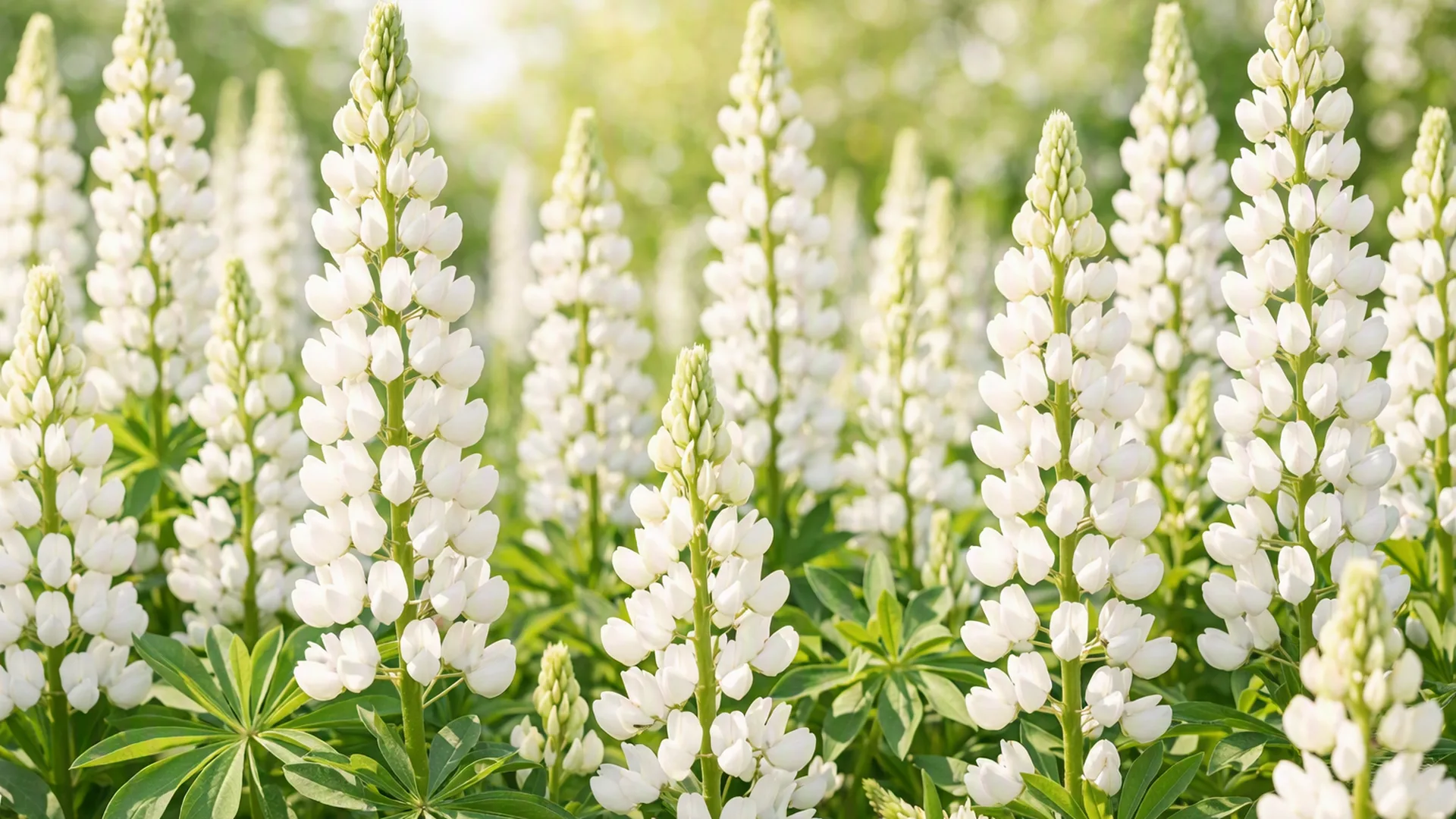
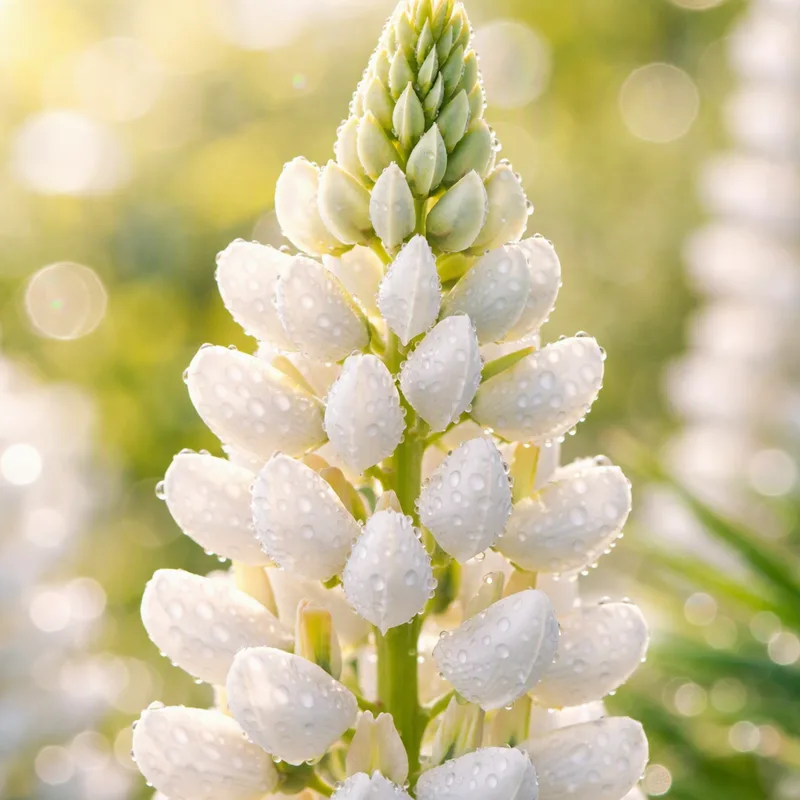
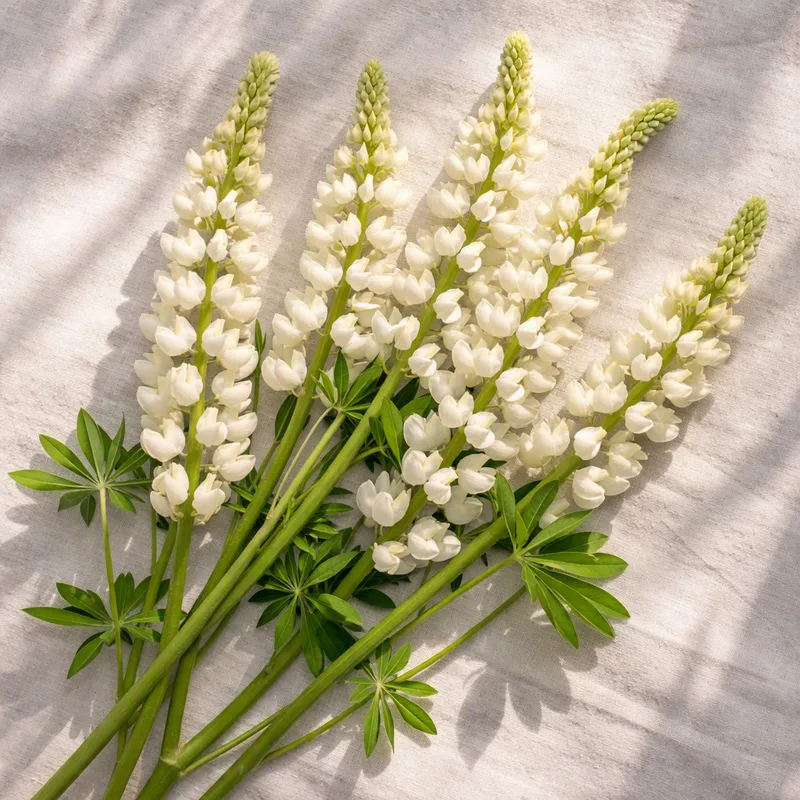
White lupin spikes stand upright in early summer like candles, with a faint cream or green blush in the bud. In a mixed border they link blue and pink flowers, and in a white scheme they give height. Classic Russell hybrids sold as 'Noble Maiden' are the best-known white.
Making the most of a white lupin
- Plant against a dark hedge or fence, which shows the pale flowers to best effect.
- Set plants 50 cm apart to give them airflow, and so reduce powdery mildew.
- Water in dry spells, as lupins have deep roots but struggle in heatwaves.
- Remove spent spikes before the pods form, unless you want to collect seed.
- Replace plants every three or four years, since older plants decline.
Climate and timing
Lupins fit best in the cool south and tablelands, where flowering starts in October and runs into December. In Canberra, they can be planted as small plants in autumn so they establish before winter. Gardeners in warm humid regions often find them short-lived and should consider delphiniums or foxgloves as alternatives for a similar look.
What to know about seeds
Lupin pods hold hard seeds that are toxic to people and animals. Cut the spikes before the pods ripen, and wash your hands after handling them. If a child has swallowed seeds, call the Poisons Information Line on 13 11 26. For animals, speak to a vet.