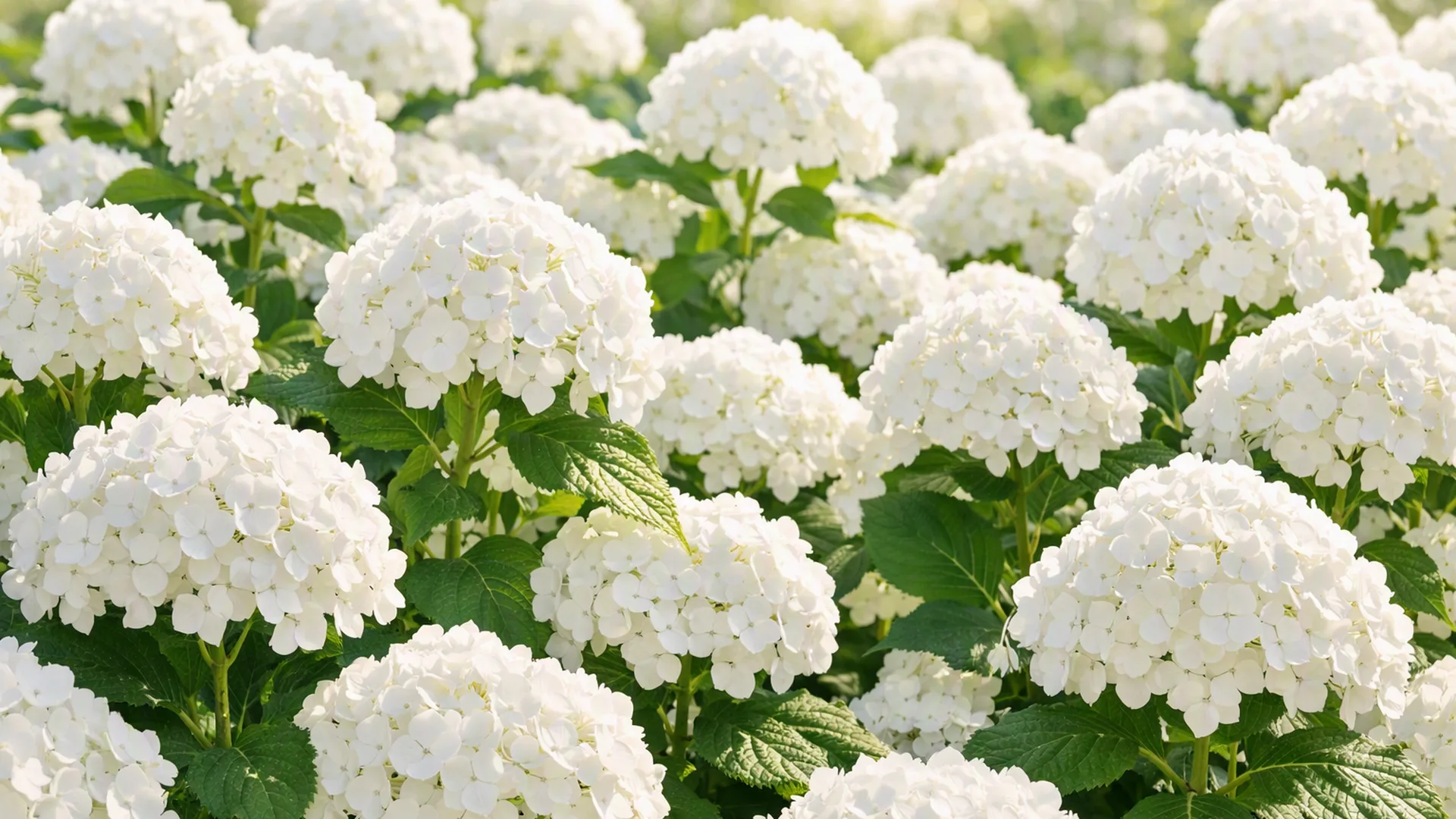

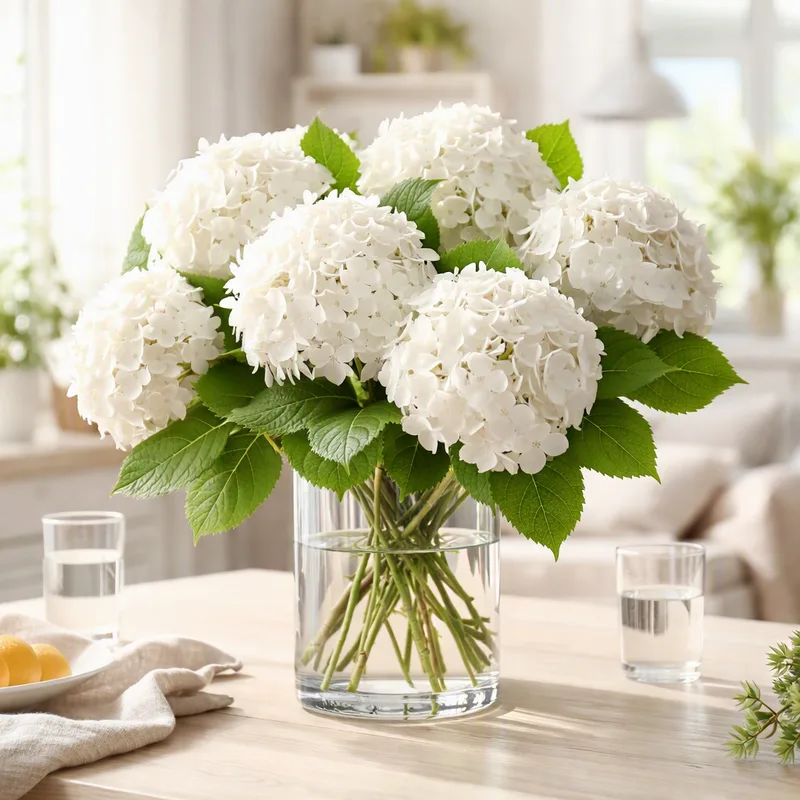
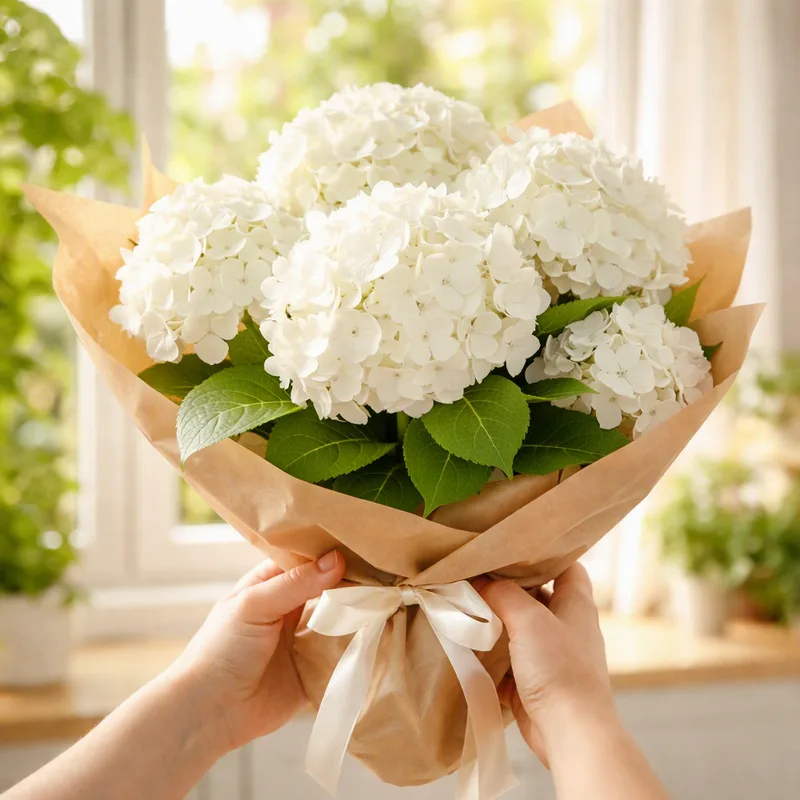
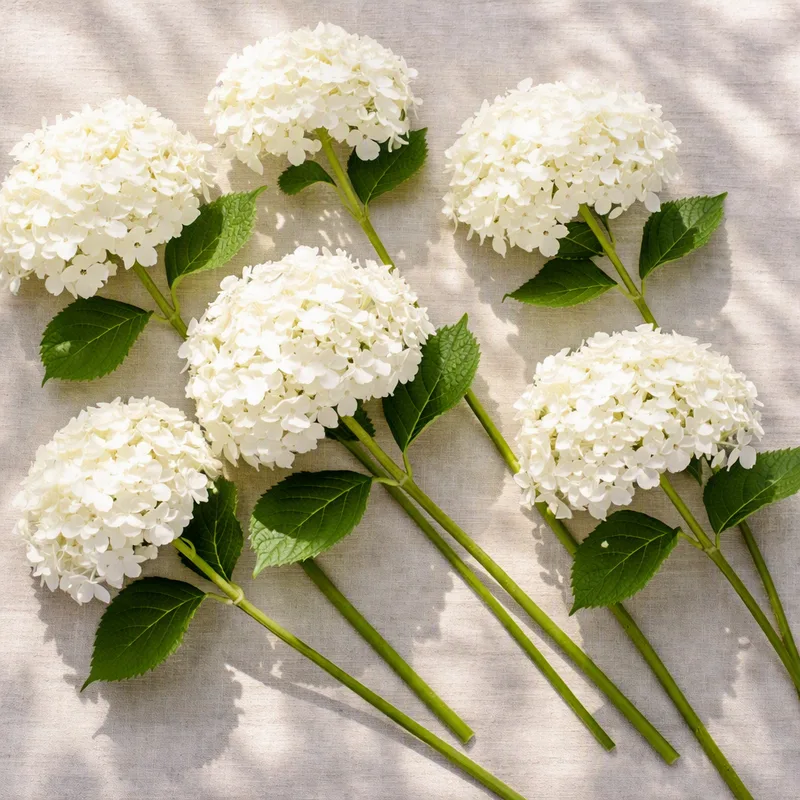
White hydrangeas are the easy ones. Unlike pink and blue mopheads, a white flower contains no pigment that responds to soil, so you can stop fretting about pH. What changes instead is the age of the bloom: heads open lime green or creamy, turn bright white, then fade slowly to parchment and soft green as autumn arrives.
Four whites compared
- Mophead whites, such as 'Madame Emile Mouillere', give full, round flower heads.
- Lacecap forms look lighter and more open, with small fertile flowers surrounded by larger white ones.
- Panicle hydrangeas (Hydrangea paniculata) carry cone-shaped white heads and tolerate more sun than mopheads.
- Smooth hydrangeas (Hydrangea arborescens), including 'Annabelle', flower on new wood and are very forgiving to prune.
A shady-garden favourite
White flowers glow in dim light, so these shrubs are a classic choice for the shaded side of a house or under tall trees. Give them rich soil and plenty of water, because the big leaves lose moisture fast on hot days. They suit Melbourne, Tasmania and the cool hills best, though a sheltered Sydney courtyard works too. Flowering runs from around December into March, so white hydrangeas often appear in Christmas arrangements and summer weddings.
Cutting for summer arrangements
Cut stems when the heads feel slightly papery and not soft. Searing the end in boiling water or recutting it under water helps, and a wilted head often revives if the whole thing is submerged for an hour.
Cyanogenic glycoside in the leaves
Hydrangea is toxic to dogs and cats on the ASPCA list because of a cyanogenic glycoside. Eating it can lead to vomiting and diarrhoea. Contact your vet if your pet has been grazing on a vase.