A flower with many occasions
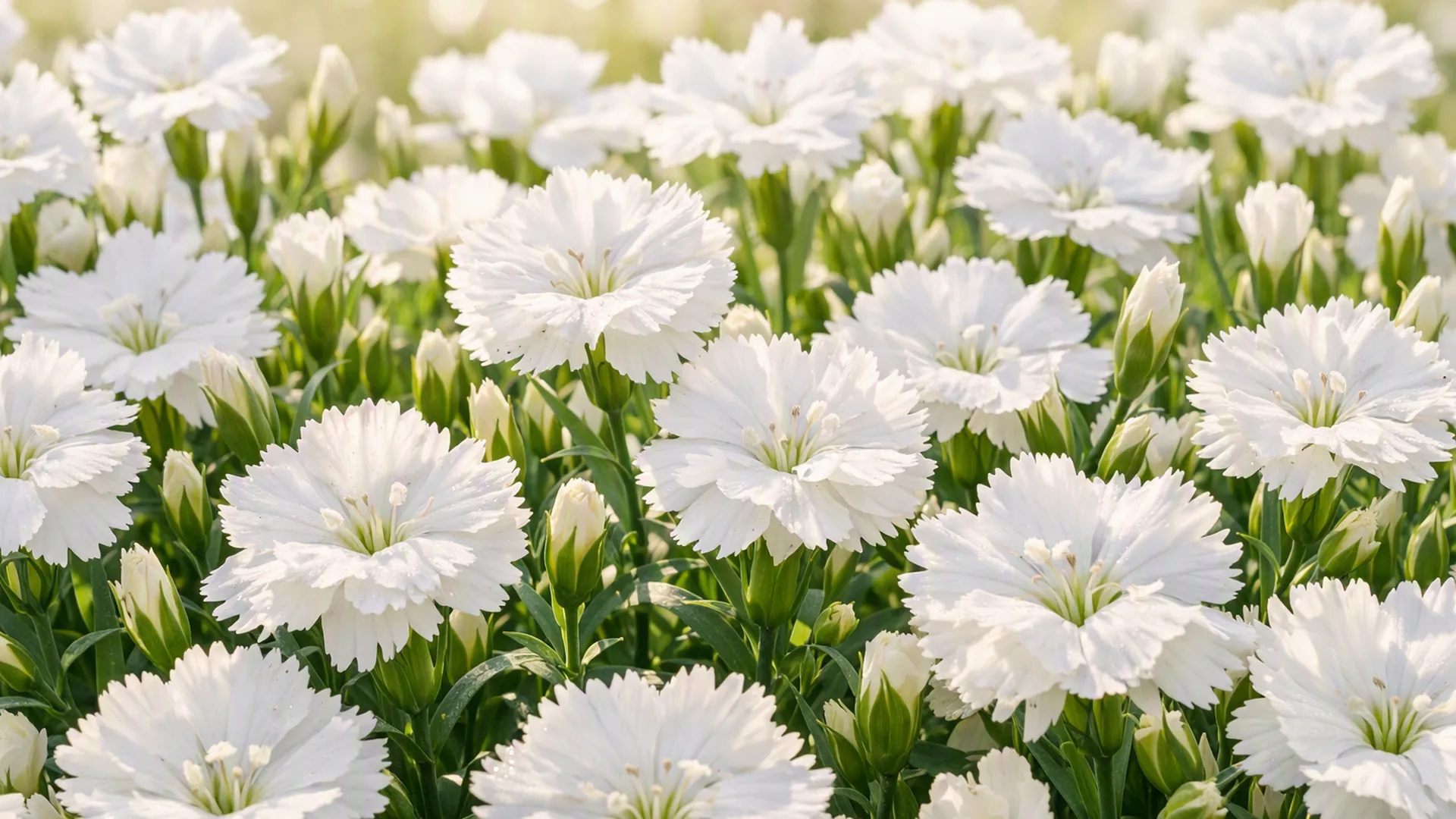
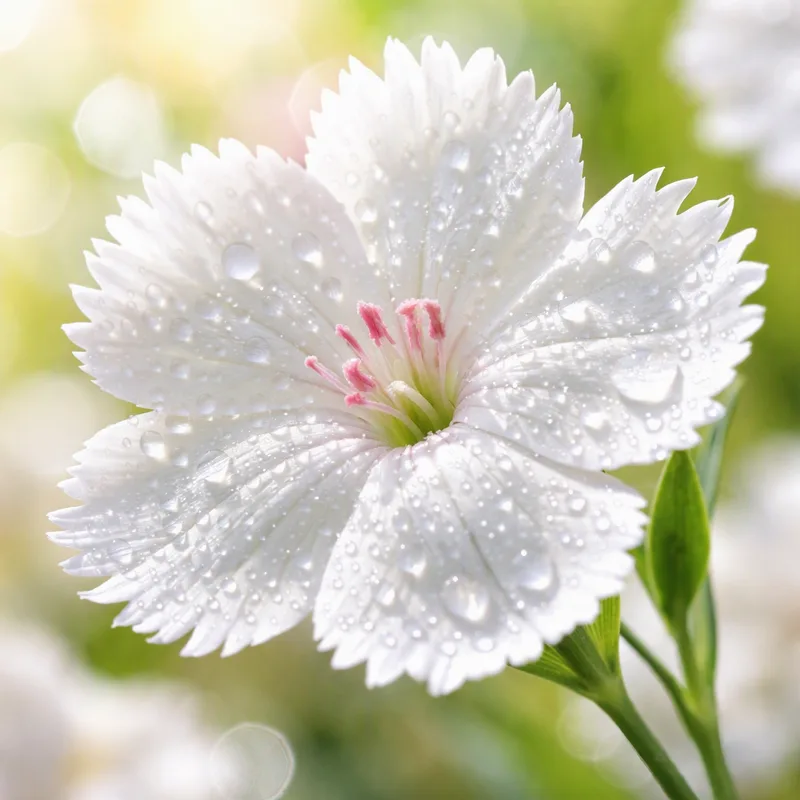
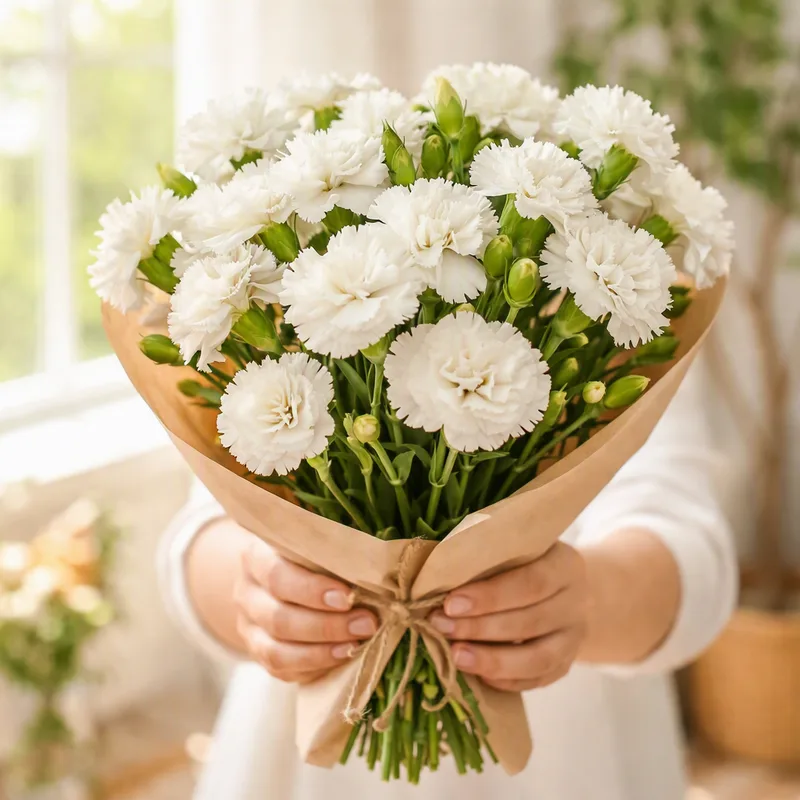
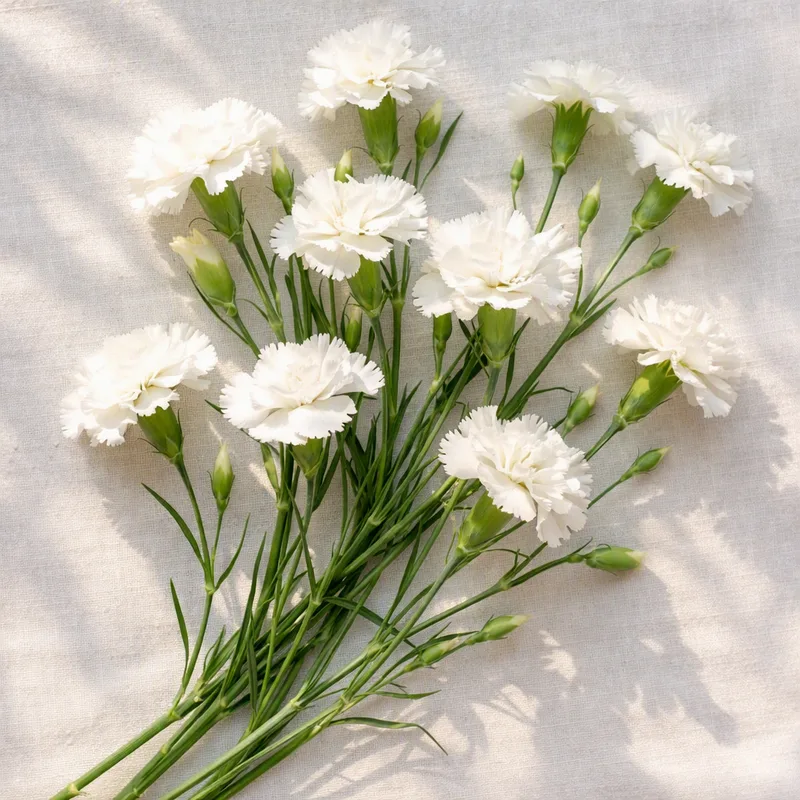
A white carnation reads as clean and formal, which is why it appears in bridal work, church flowers and funeral tributes. In the language of flowers it has traditionally stood for pure love and good luck. Many people also associate a white carnation with Mother's Day in other countries; in Australia, which marks the day on the second Sunday in May, chrysanthemums are the usual flower, so a white carnation tends to join a mixed bunch rather than stand alone.
Why florists use white for dyeing
Because the petals are pale and the stem draws up water readily, a white carnation will take on whatever colour is in the vase. Stand one in water with a few drops of food dye and tints appear in the petal edges within a day or so. It is an easy experiment with children, and it explains why green and blue carnations exist at all.
Keeping them looking fresh
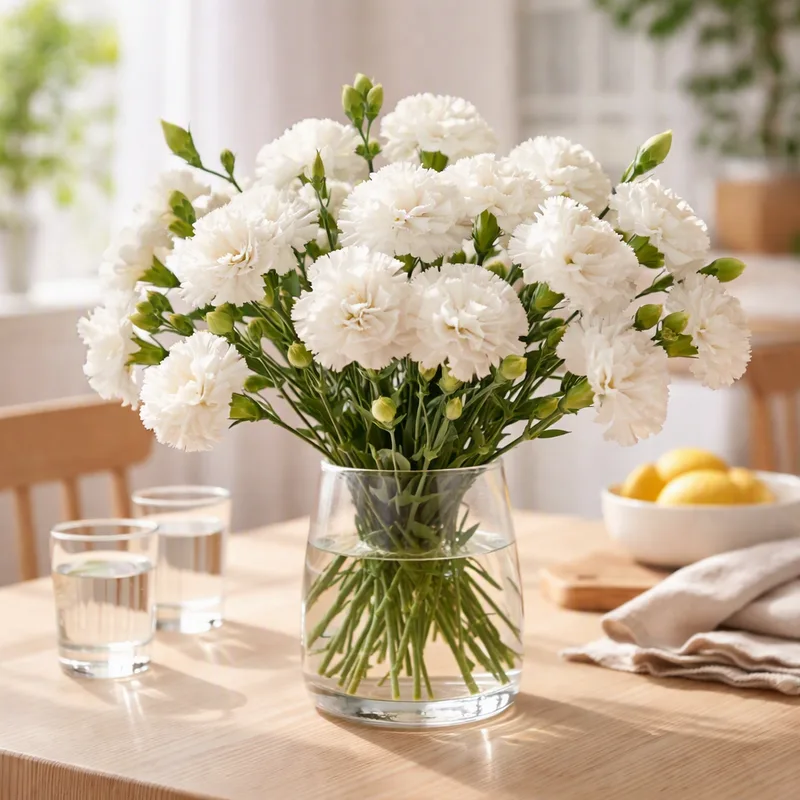
- Cut about two centimetres off each stem on an angle, just above a node.
- Remove any leaves below the waterline.
- Change the water every two days and rinse the vase.
- Keep the vase out of afternoon sun and away from ripening bananas, apples and mangoes.
With that routine white carnations typically last ten to fourteen days, even in a warm room.
Around pets and fabric
The ASPCA rates carnation as toxic for dogs, cats and horses. The effects are mild, usually stomach upset or a skin rash, but a vase on the floor is best avoided. Pale petals also stain: lift them off fabric straight away.