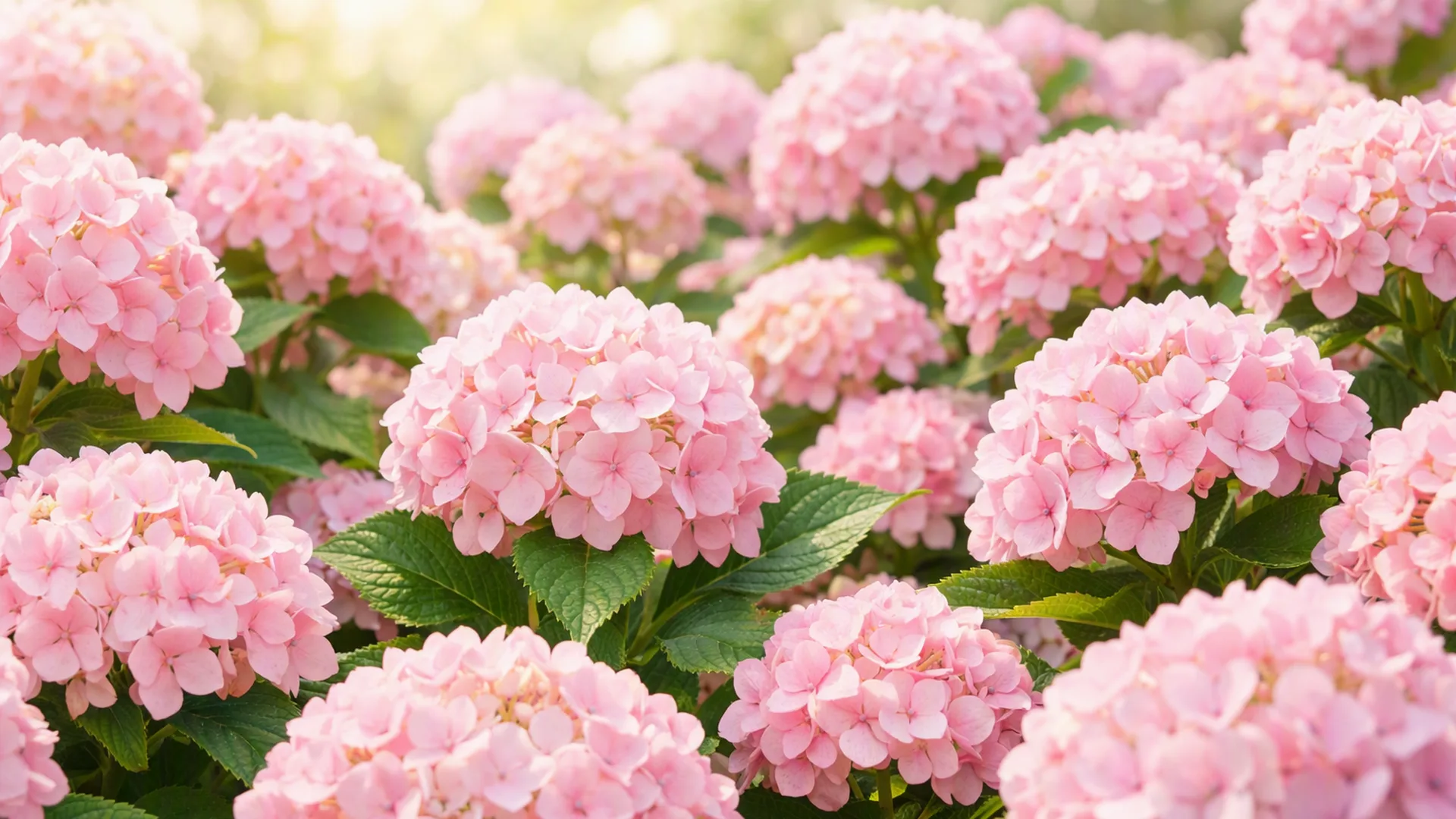
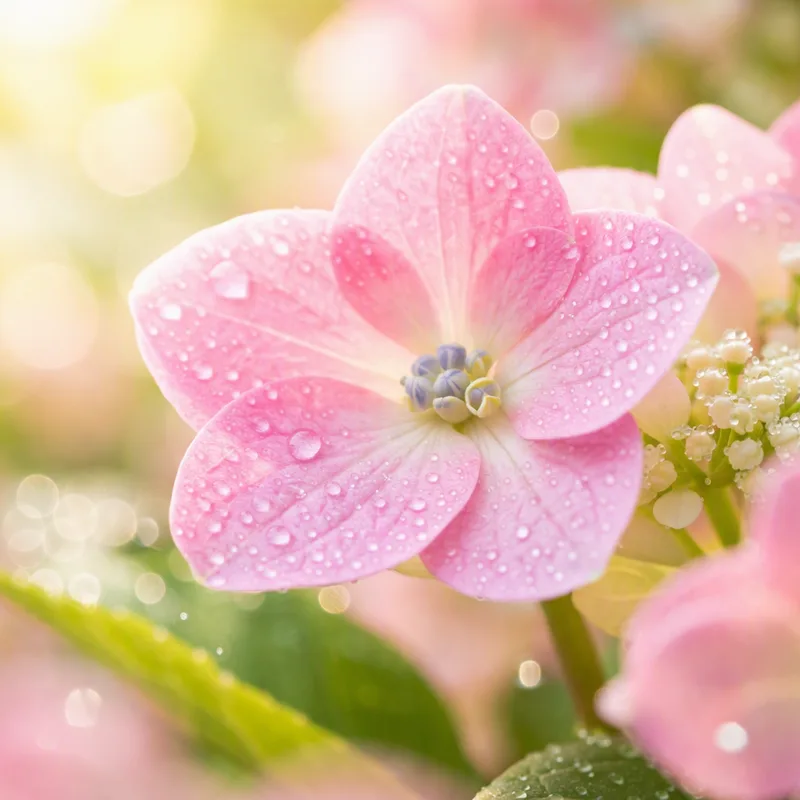
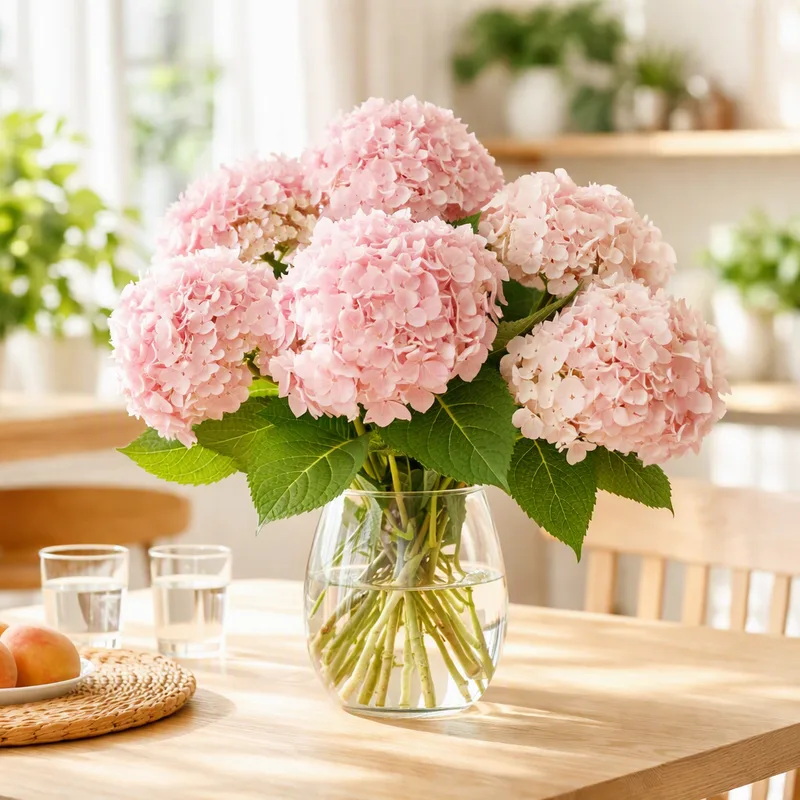
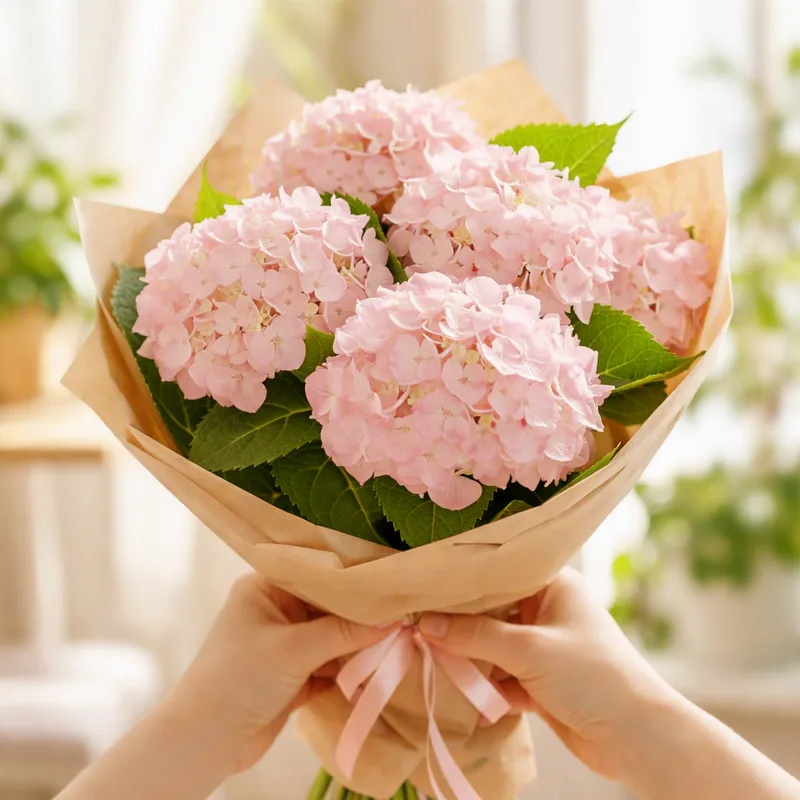

Pink is the natural face of the mophead hydrangea in many Australian gardens, because plenty of soils are close to neutral. Plants that grow in more acid ground drift towards blue, while those with less aluminium available stay a clear pink.
Keeping the pink clear
Nothing complicated is needed. Garden lime or dolomite raises the soil pH, and a fertiliser that is high in phosphorus (the middle number on the label) ties up aluminium and favours pink. Avoid anything sold to turn hydrangeas blue. If your plant has gone mauve, switching to a lime treatment in late winter will move it back over a season or two.
Cutting back and keeping cool
Mopheads form buds on last year's growth. Cut spent heads after flowering in late summer or early autumn, taking each flowering stem back to the first strong pair of buds. In temperate gardens, flowers typically appear from December to March. Water deeply in heat, because big leaves wilt fast.
A gift plant
Potted pink hydrangeas are a popular gift for Mother's Day in May and for birthdays, though a plant raised indoors will need hardening before it goes outside. In mild districts it can be planted out in a shaded spot after flowering.
Drying pink heads at home
Hydrangeas dry well. Leave the stems in a vase with a little water and the heads will slowly turn antique pink and green.
If a pet samples the flowers
The ASPCA lists hydrangea as toxic to dogs, cats and horses. A cyanogenic glycoside can cause vomiting and diarrhoea. If something has been eaten, call your vet.