
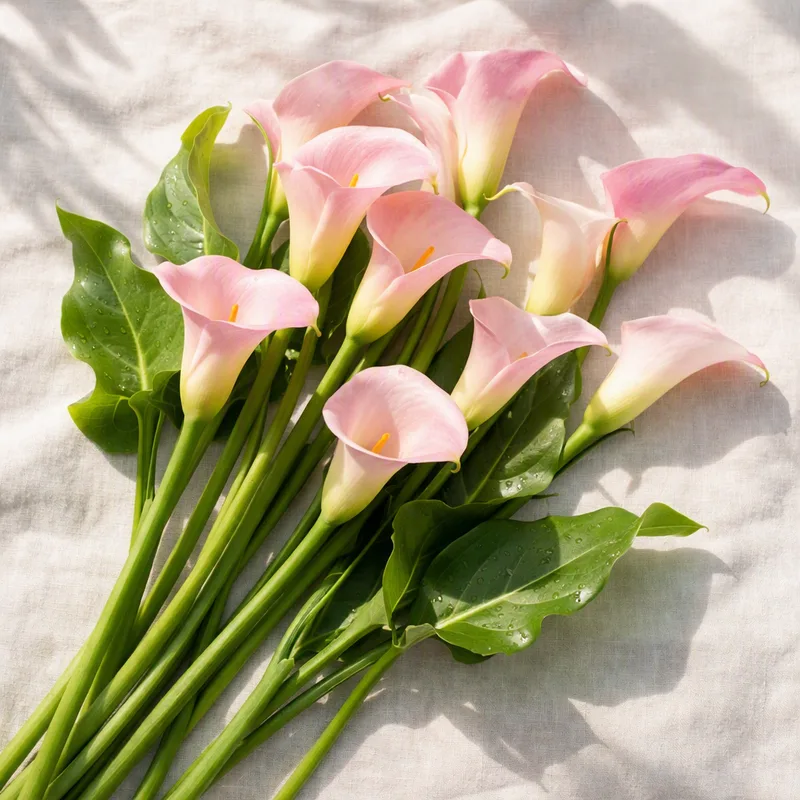
Pink from a smaller species
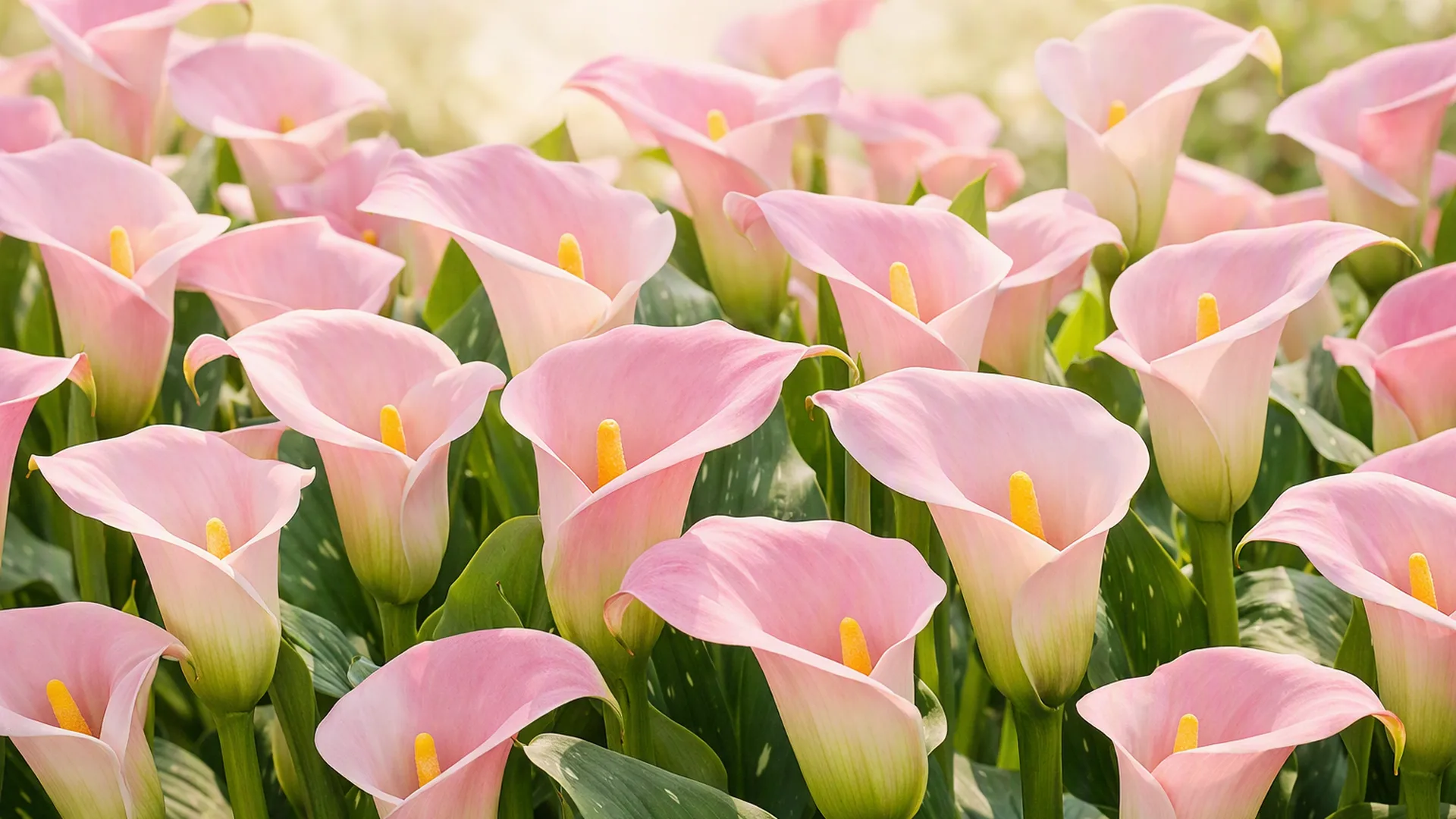
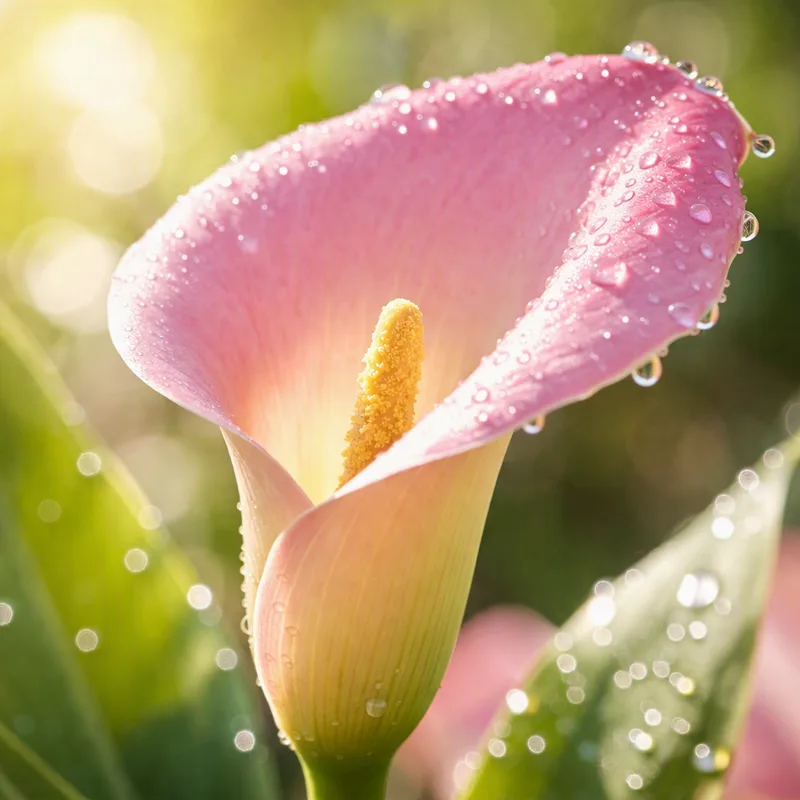
Many pink callas descend from Zantedeschia rehmannii, a small South African species often called the pink arum. It has narrower leaves than the white arum lily, and the spathe is smaller and neater, in tones from pale pink to deep rose. Some hybrids have a darker throat, and others fade from pink to cream. Compared with the white calla, pink forms are more compact, usually under 60 cm.
Pot-sized plants
The pink calla is an excellent plant for a pot on a patio. A single tuber will give several flowers in a season.
- Plant tubers in spring in a pot about 20 cm wide, with the growing points facing up.
- Use a free-draining mix with compost and keep the soil damp but not wet.
- Place in morning sun and afternoon shade where summers are hot.
- Feed every few weeks while the plant is growing.
Seasons
Pink callas flower in summer and rest in winter. After flowering, the leaves gradually yellow and die back. At that point, reduce watering, and keep the pot dry until the next spring. In frosty places, bring the pots under cover. Where winters are mild, such as Sydney or Brisbane, tubers are often left in the ground in a well-drained bed.
Pink stems indoors
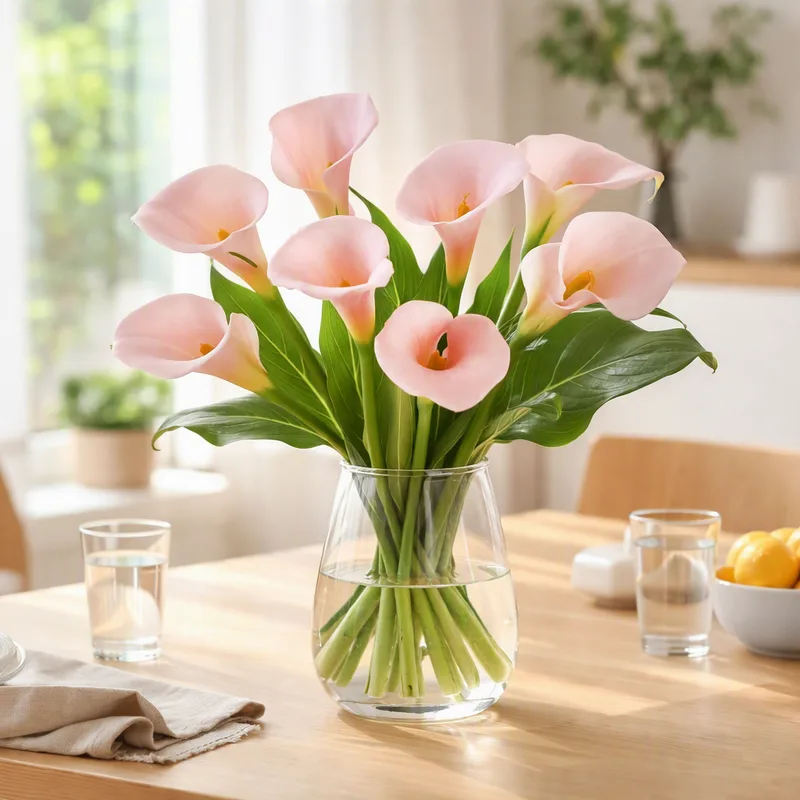
When used as a cut flower, pink callas keep well in a clean vase of cool water for about a week. Handle them gently, because the spathe bruises.
Pet danger
On the ASPCA's plant list, calla lily is marked as unsafe for cats, dogs and horses, and the sap can irritate skin and mouths.