
Back towards the original
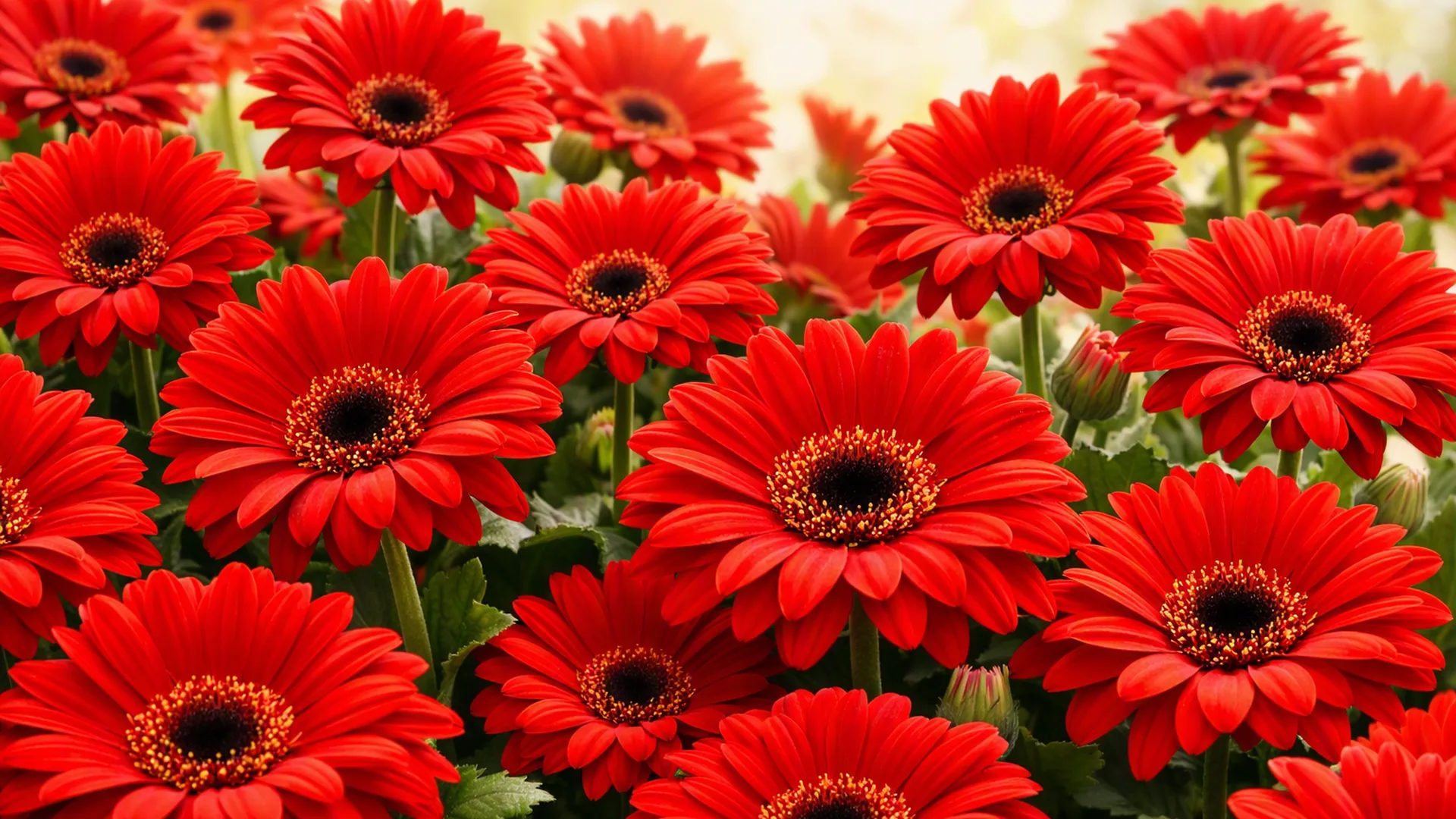
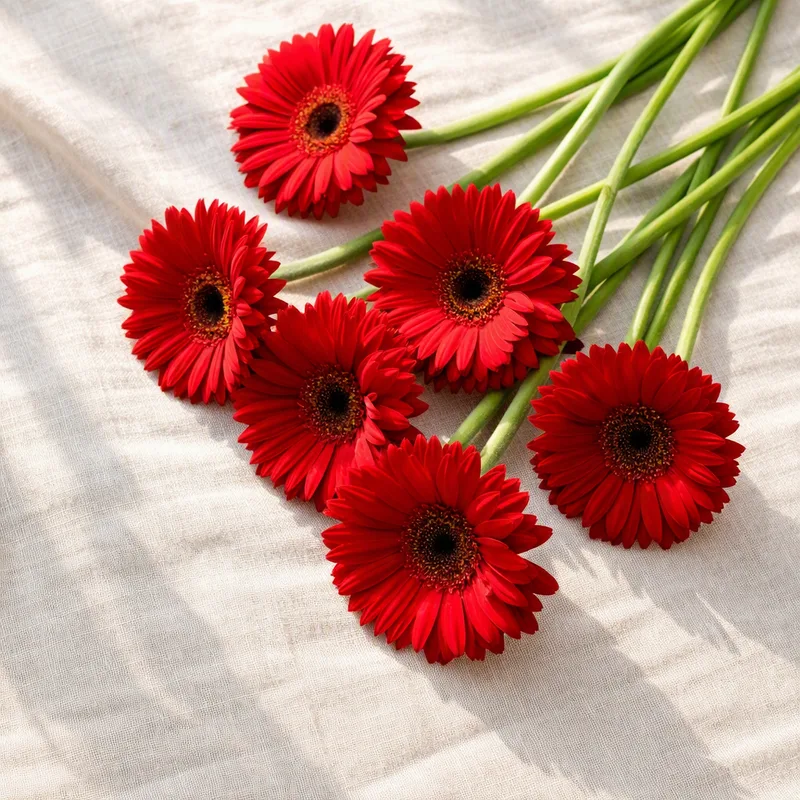
The wild Gerbera jamesonii, found in the Barberton region of South Africa, is a vivid orange-red daisy. A red gerbera therefore sits nearer to the plant's natural look than most of the pastel shades. Deep reds can lean orange, crimson or even slightly purple, depending on the variety, and under indoor light the colour looks darker than it does in daylight.
When red is the colour of choice
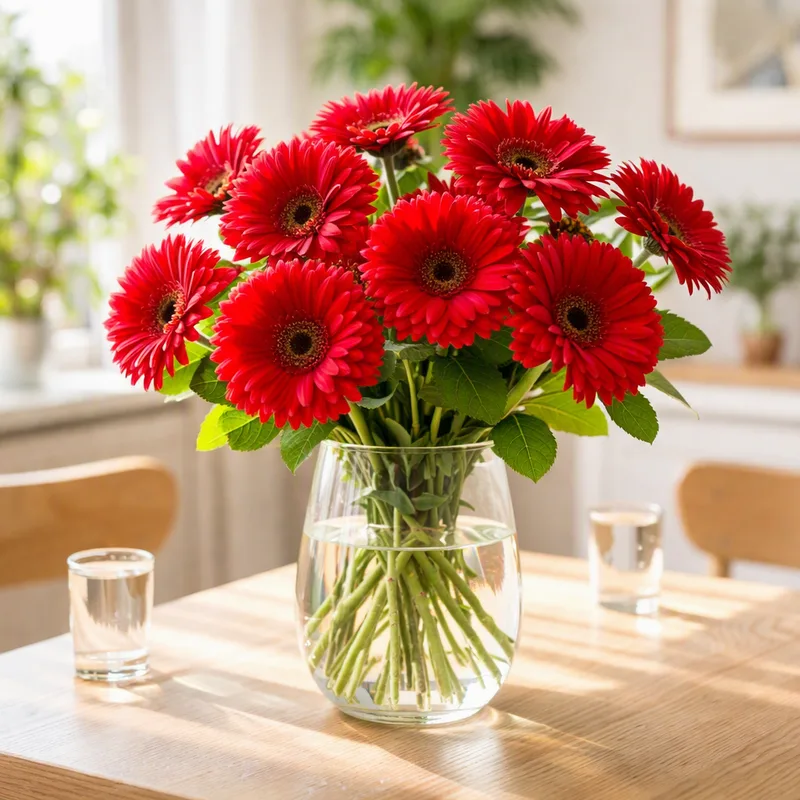
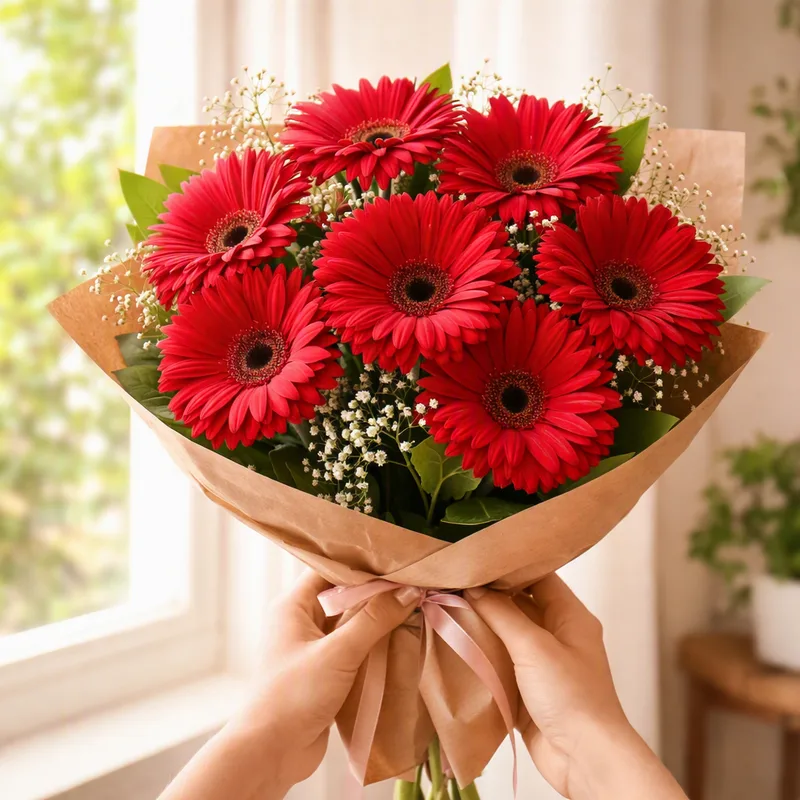
Red is a bold signal: love, energy and celebration. A tight bunch of red gerberas is a cheerful alternative to roses on Valentine's Day on 14 February, which falls in the middle of an Australian summer. Because the heads are open and flat, they also read well from a distance, so they suit a Christmas table, a birthday or a send-off for someone heading overseas. For a more relaxed look, set them in a short jar by themselves.
Keeping red heads fresh
Red gerberas follow the same rules as other colours, but a few points matter more in a hot climate:
- Cut about 2 cm off each stem and put them into cool, clean water straight away.
- Keep the vase out of afternoon sun, as heat makes the neck bend sooner.
- Top up the water often, because the stems drink a lot in summer.
In a pot or border
A red gerbera plant works as a splash of colour on a balcony or in a courtyard. It likes full morning sun, free-draining soil and feeding every few weeks in the growing season. In Perth and Adelaide, where summer is dry, water deeply and mulch the soil around the plant. In humid Brisbane or Cairns, space the plants well so air moves through the foliage.
A pet-friendly red
The ASPCA does not class gerbera as poisonous to dogs, cats and horses, so a red gerbera is not a poison risk for the household.