
A name with two meanings
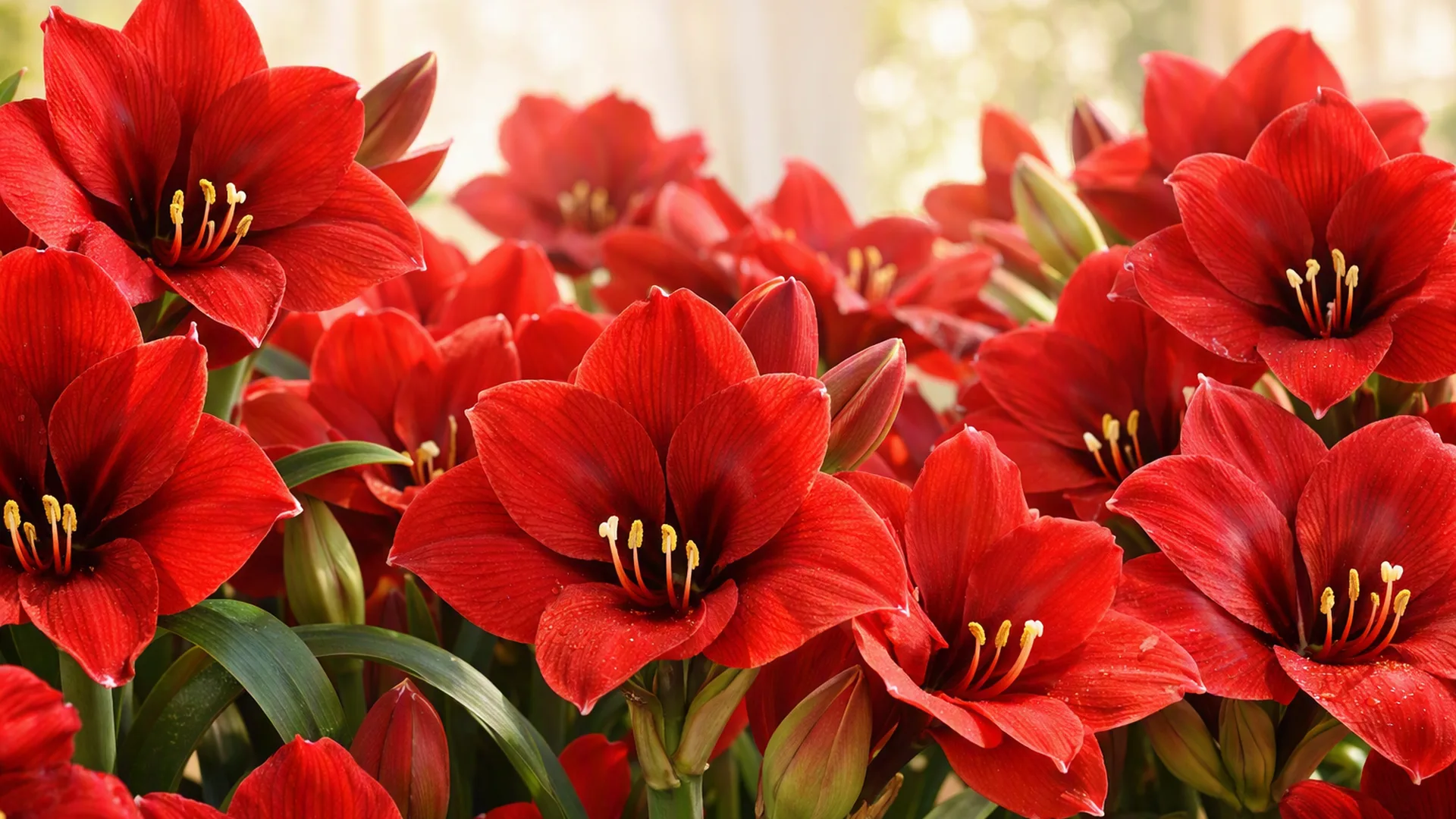
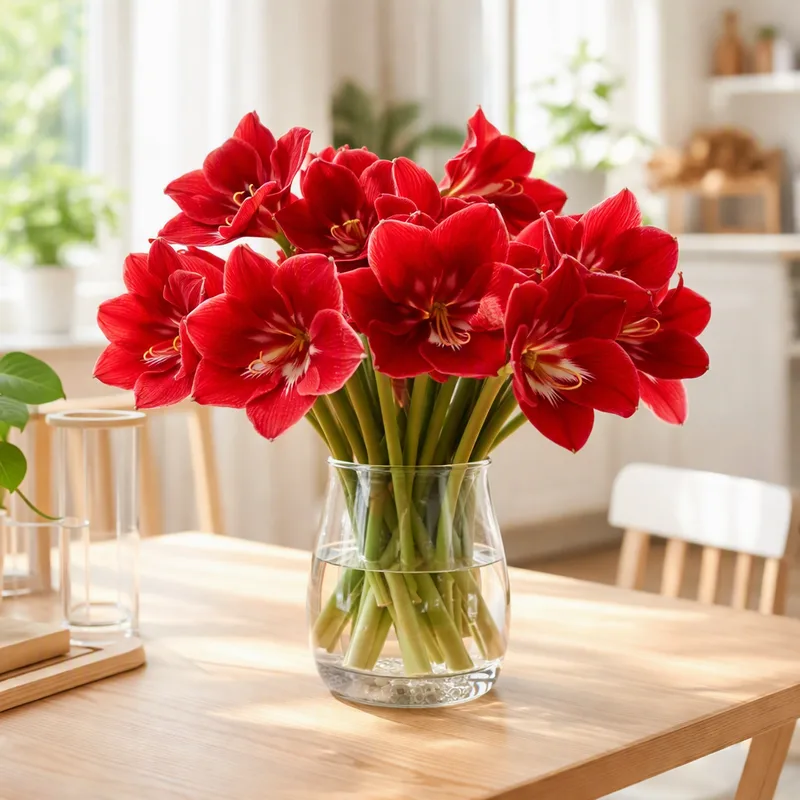
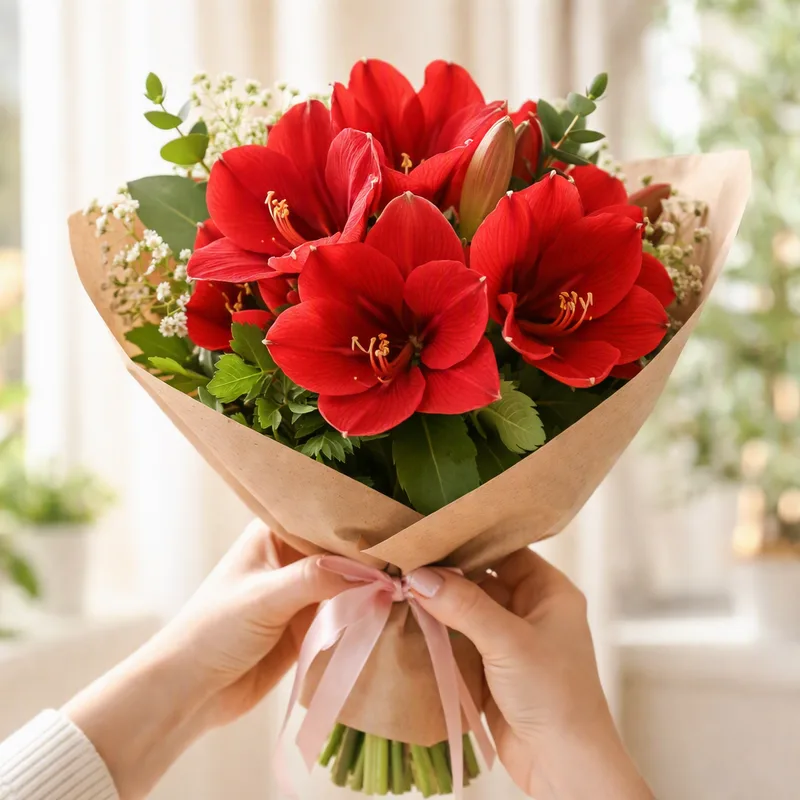
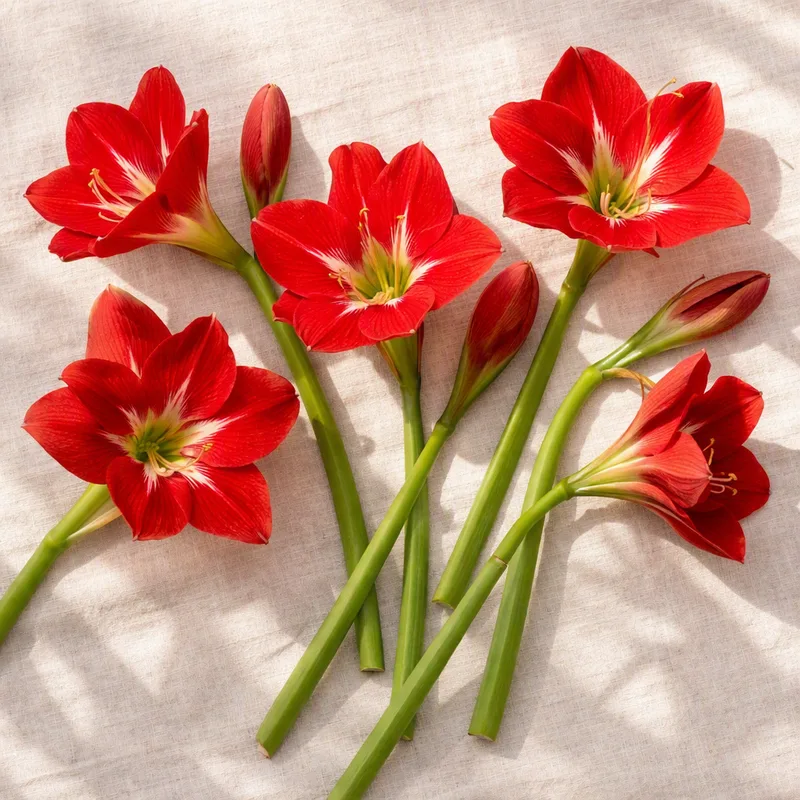
Strictly, Amaryllis is a South African genus with one famous member, Amaryllis belladonna, the pink "naked lady" that appears without leaves in autumn. The huge, red-and-white trumpet bulbs sold as amaryllis are Hippeastrum, native to tropical and subtropical America from Mexico down to Argentina. The common name has been borrowed for them for generations, and it is what most people search for.
Flowering time at this end of the world
Northern catalogues sell Hippeastrum for Christmas, but here the garden season runs differently. Bulbs planted in autumn or winter send up a thick stem in spring, around September to November, carrying two to four flowers about 15 centimetres wide. Pots indoors can be brought on earlier with warmth.
- Plant with the top third of the bulb above the soil.
- Choose a snug pot, about two fingers of space around the bulb.
- Water sparingly until the stem is growing, then more freely.
- After flowering, cut the stem and keep the leaves growing in sun, feeding every few weeks.
Where it grows well
Hippeastrum is happiest in temperate and subtropical gardens, and it handles light frost under cover. In the tropics it can be left in the ground all year. In hard frost, grow it in a pot that can come inside.
Pet safety around amaryllis
For dogs, cats and horses the ASPCA entry is a warning. The principle named is lycorine, and it names vomiting, depression, diarrhoea, abdominal pain, hypersalivation, anorexia and tremors as signs. The bulb is the part with the highest concentration, so keep dug bulbs out of reach and call a vet if one is chewed.