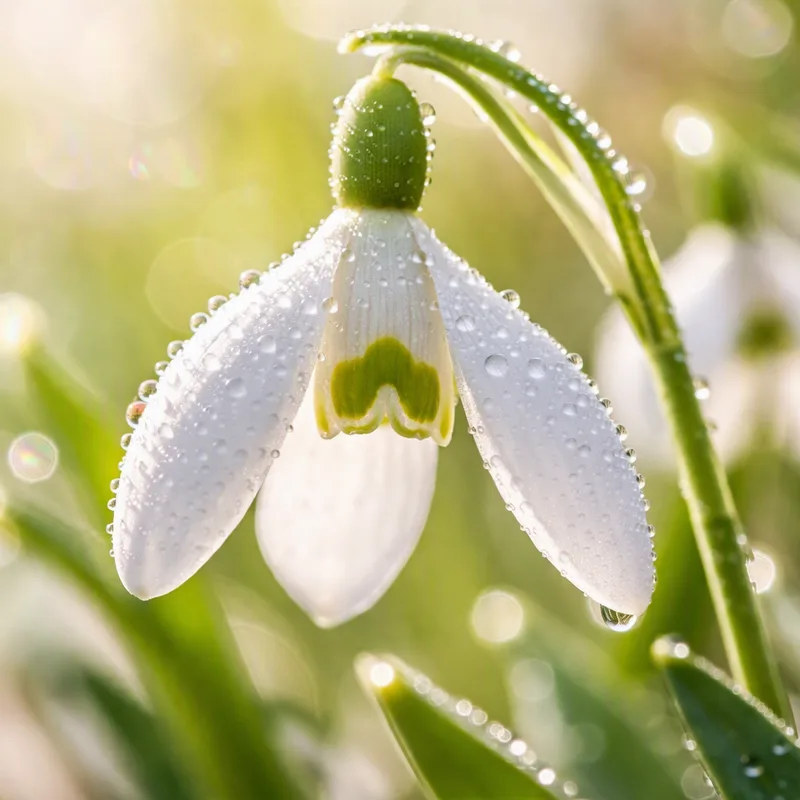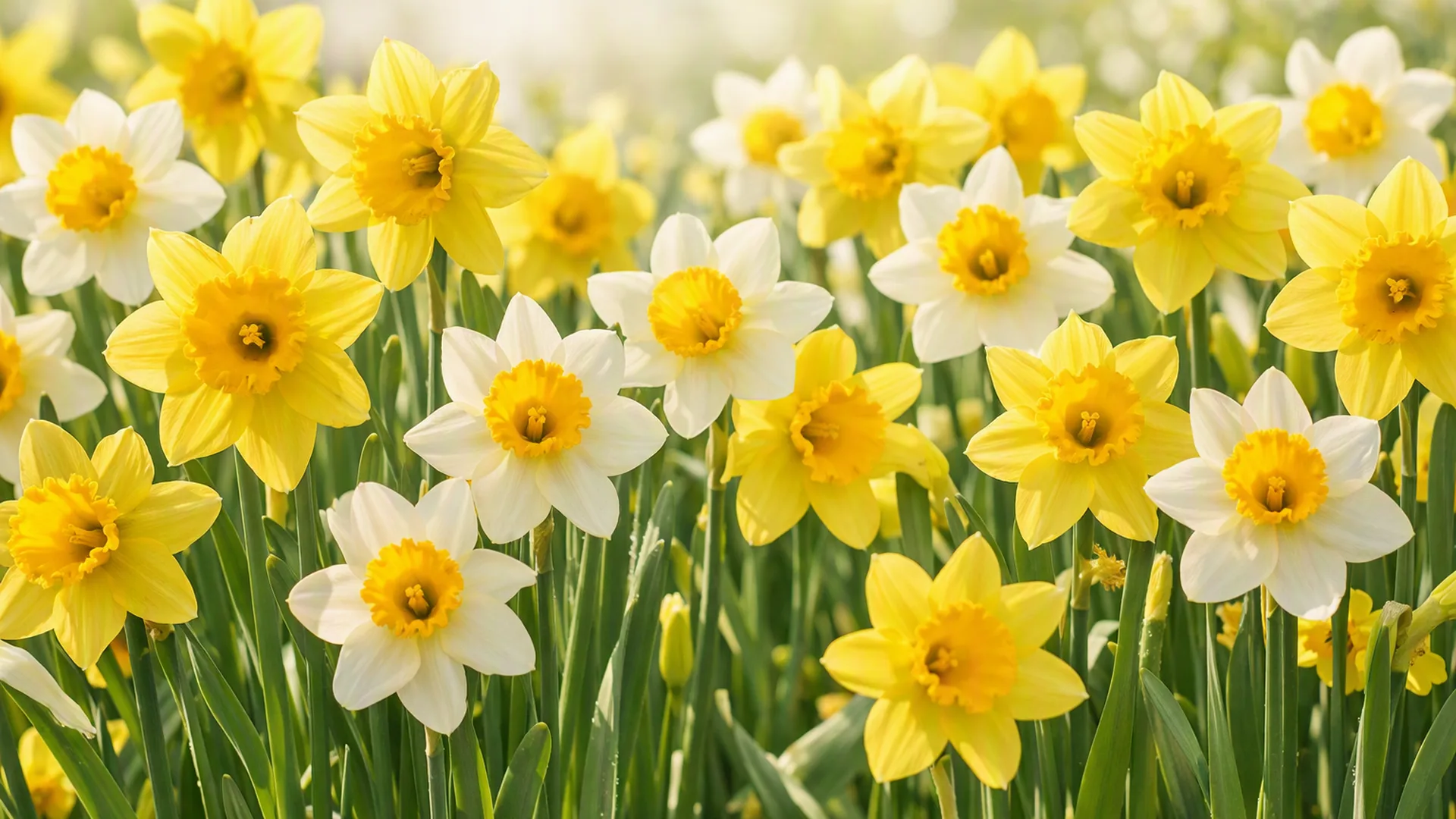
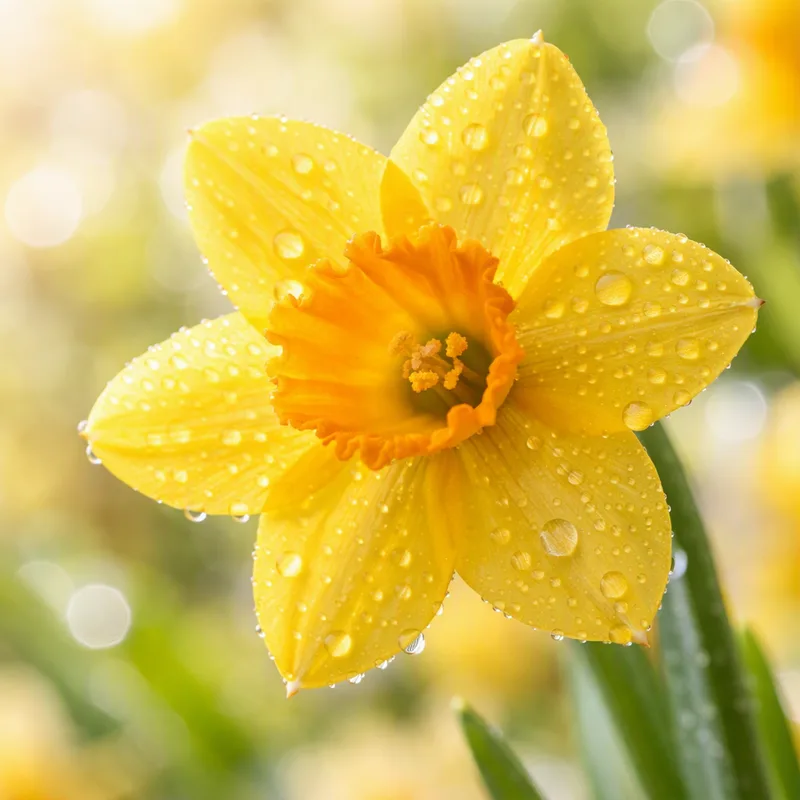
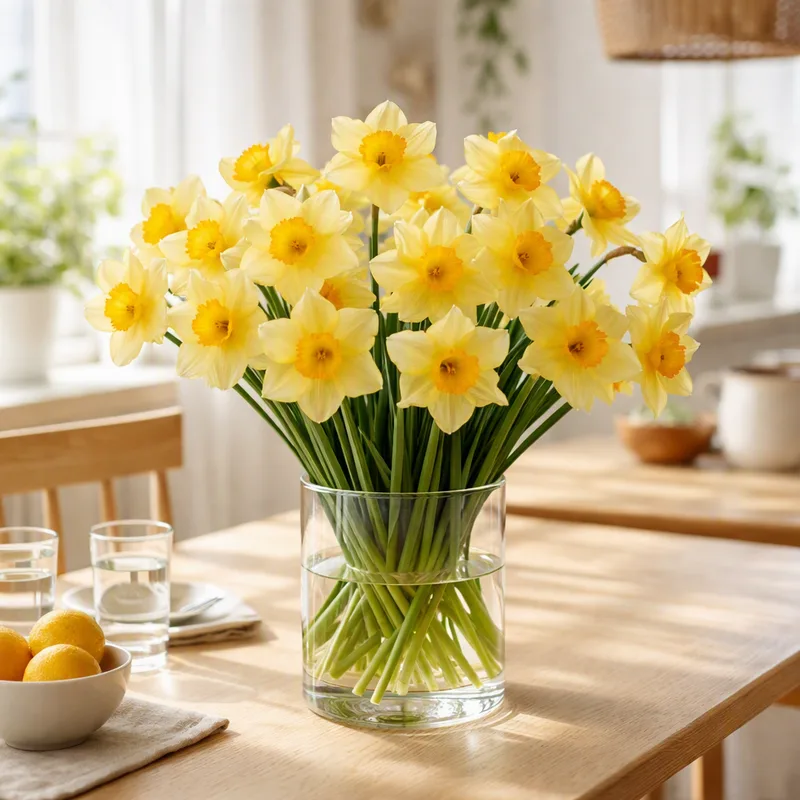

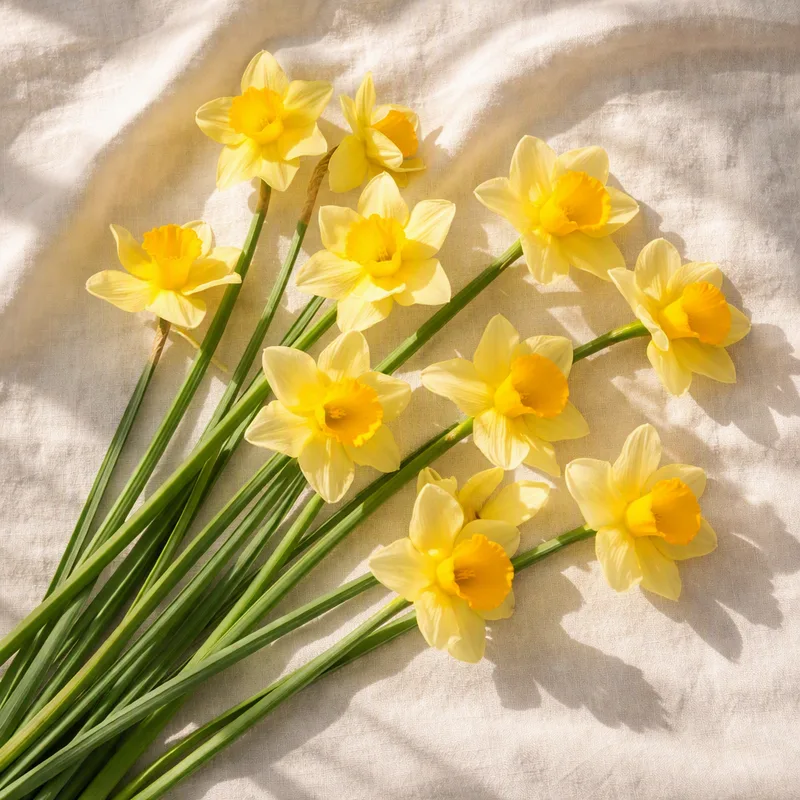
Daffodil is the everyday name for Narcissus, a genus in the amaryllis family with about 70 to 80 species and thousands of garden cultivars. The flowers have six petal-like tepals around a central trumpet or cup. Narcissi are native to meadows and woodland in southern Europe and North Africa, and the centre of diversity is in the western Mediterranean.
Winter to early spring
In the Southern Hemisphere, daffodils bloom from late winter, about July, to September. Daffodil Day, a cancer charity appeal, is held in late August, and the yellow flower is closely tied to hope in Australia.
Bulbs and climate
Daffodils need a cool winter. They do best in Melbourne, Tasmania, Canberra, the Adelaide Hills, the Blue Mountains and other chilly areas. In Sydney, Perth and Brisbane, many varieties flower weakly after the first year unless bulbs are chilled before planting. Tropical gardens are not suitable.
- Plant bulbs from March to May, about three times their own height deep.
- Choose a sunny or part-shaded spot with sharp drainage, since bulbs rot in wet soil.
- In warm regions, chill bulbs in the vegetable drawer for six weeks, away from ripening fruit.
- Jonquils and tazetta types usually cope better with mild winters.
Once the blooms fade
Let the leaves die back naturally for six weeks so the bulb can recharge. Mark the spot and plant summer annuals nearby.
Why daffodils are a pet hazard
According to the ASPCA, daffodils are toxic to dogs, cats and horses. Lycorine and other alkaloids cause vomiting, drooling and diarrhoea, and large amounts can lead to convulsions, low blood pressure, tremors and heart rhythm problems. The bulbs are the most poisonous part. Call a vet at once if a pet digs one up.