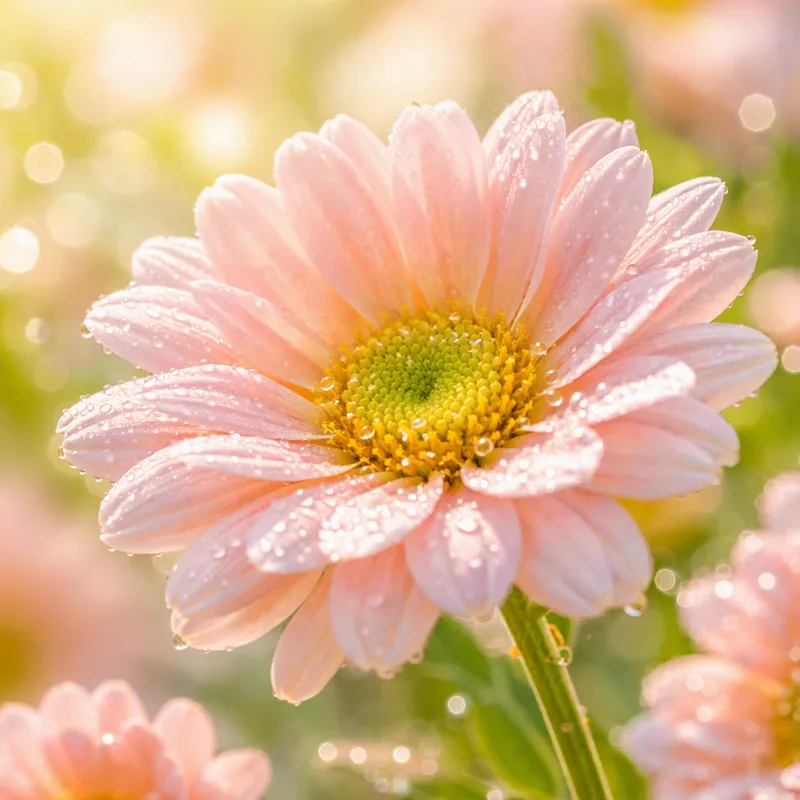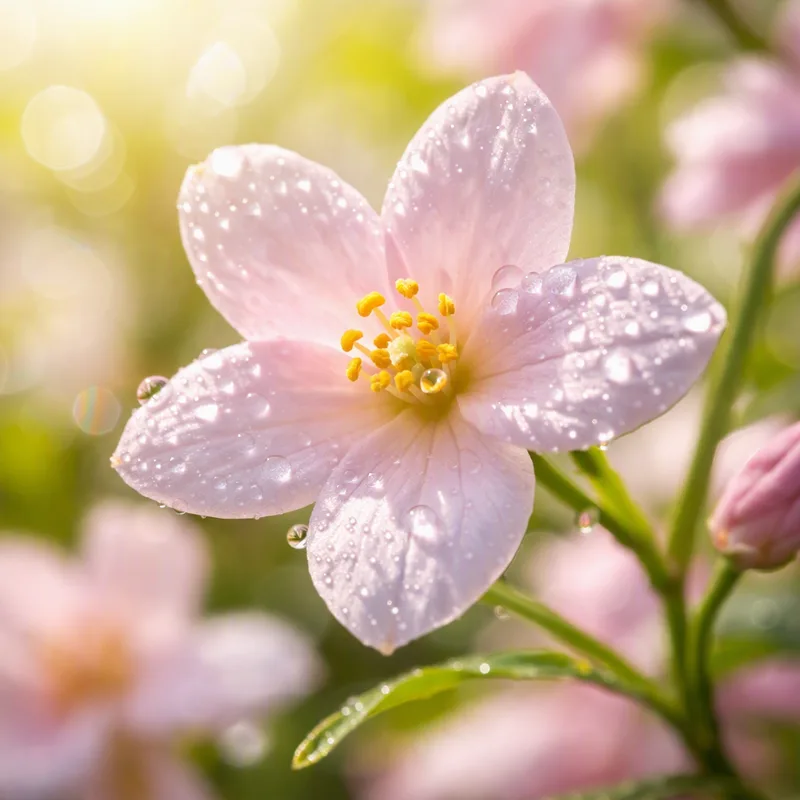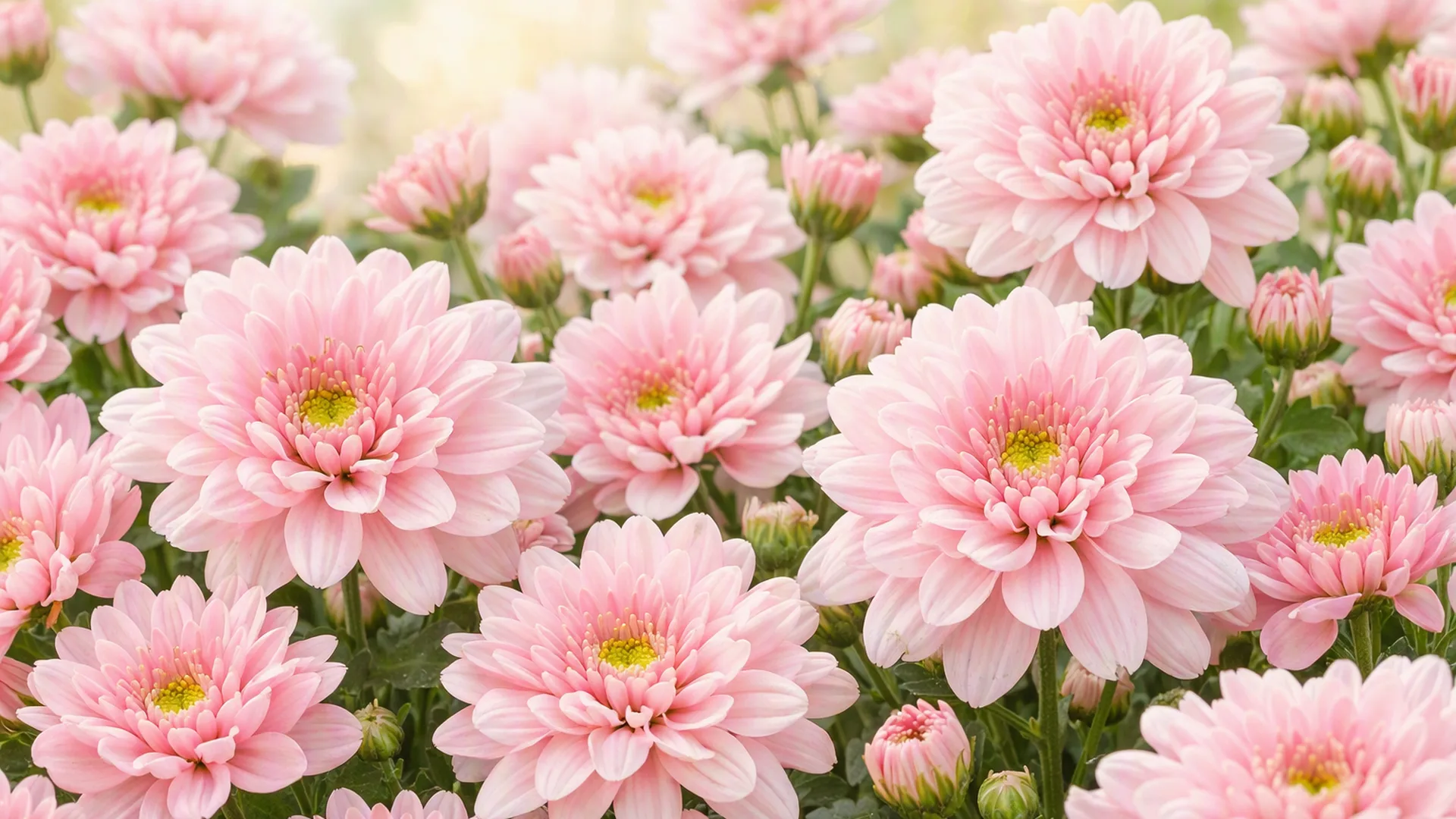
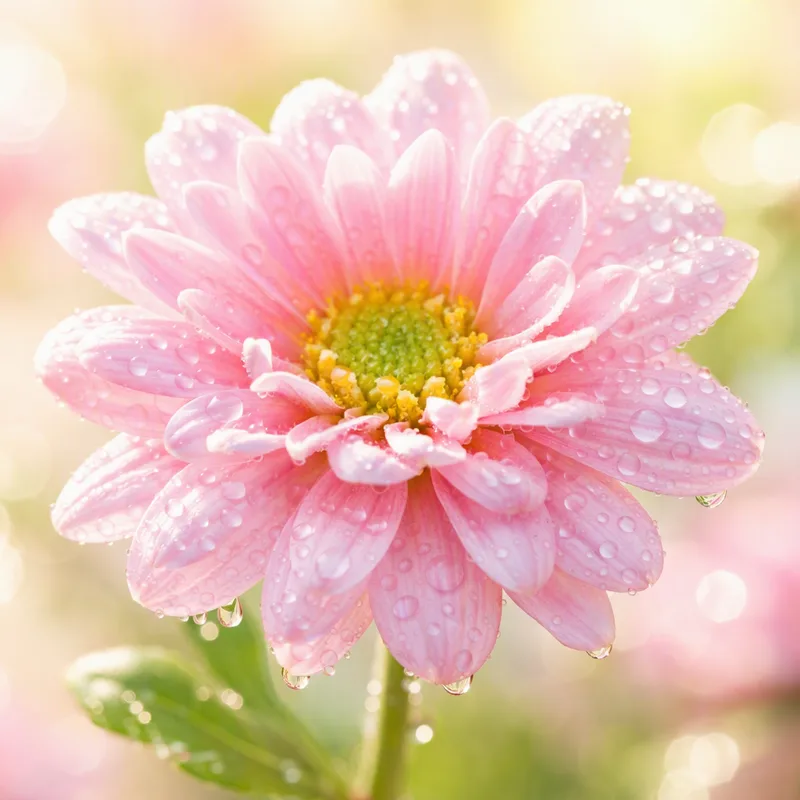
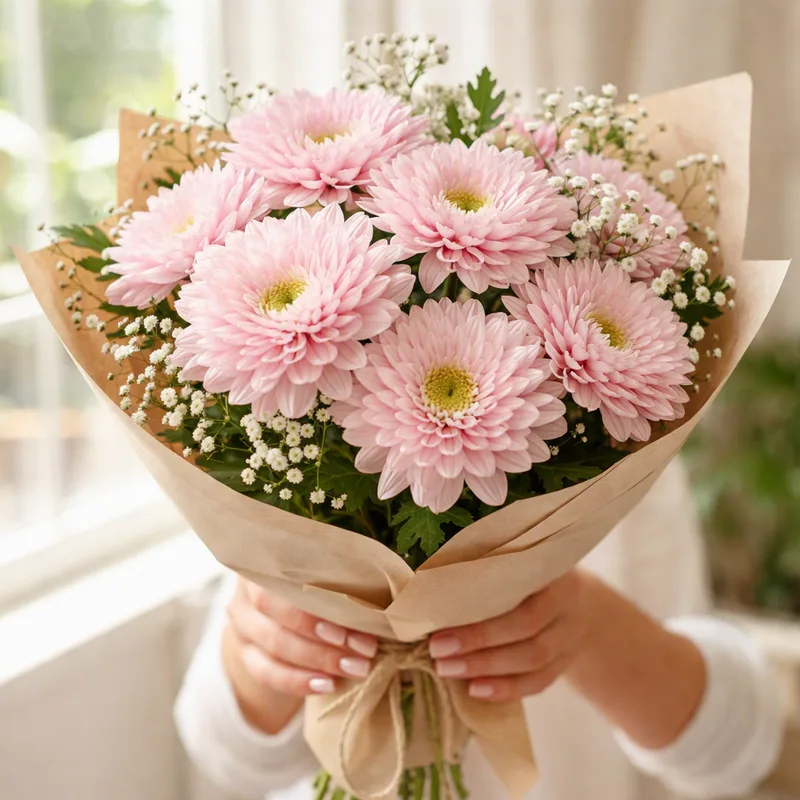
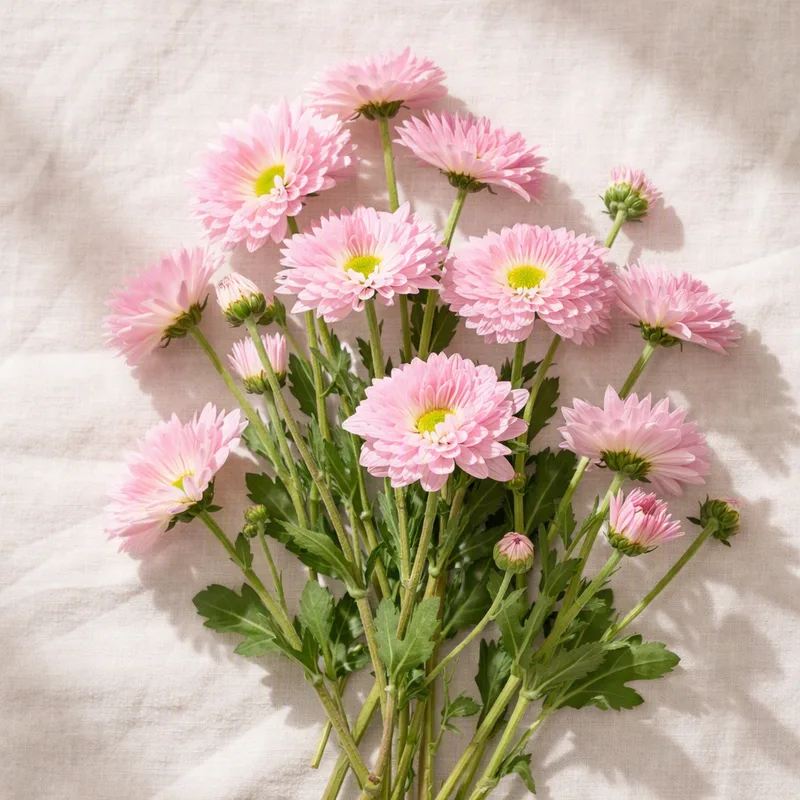
Chrysanthemums are perennial daisies from East Asia, with China the centre of their diversity. They have been cultivated there for well over two thousand years, and there are now thousands of named varieties. Florists and gardeners usually just call them mums.
A flower that follows the day length
Mums are short-day plants: they form buds when nights lengthen. In the Southern Hemisphere that puts the natural garden display in autumn, from about March to May. Commercial growers shade or light their crops, which is why cut mums are on sale in almost every month. Mother's Day falls on the second Sunday in May, right in peak season, and mums are the traditional flower for it.
Growing them in Australian gardens
Buy potted plants in autumn for instant colour, or plant young stock in spring. Give them a sunny spot, free-draining soil and a mulch to hold moisture. Pinch out the growing tips through spring and early summer so the plant branches, and stop around the end of January so buds are not lost. After flowering, cut the stems back hard in winter and divide clumps if they have become crowded.
- Cool and temperate areas (Melbourne, Hobart, Canberra, Adelaide Hills): reliable perennials.
- Subtropical Brisbane and the humid coast: fine, but watch for fungal leaf spot and white rust in muggy weather.
- Tropical north: better treated as short-lived colour in pots.
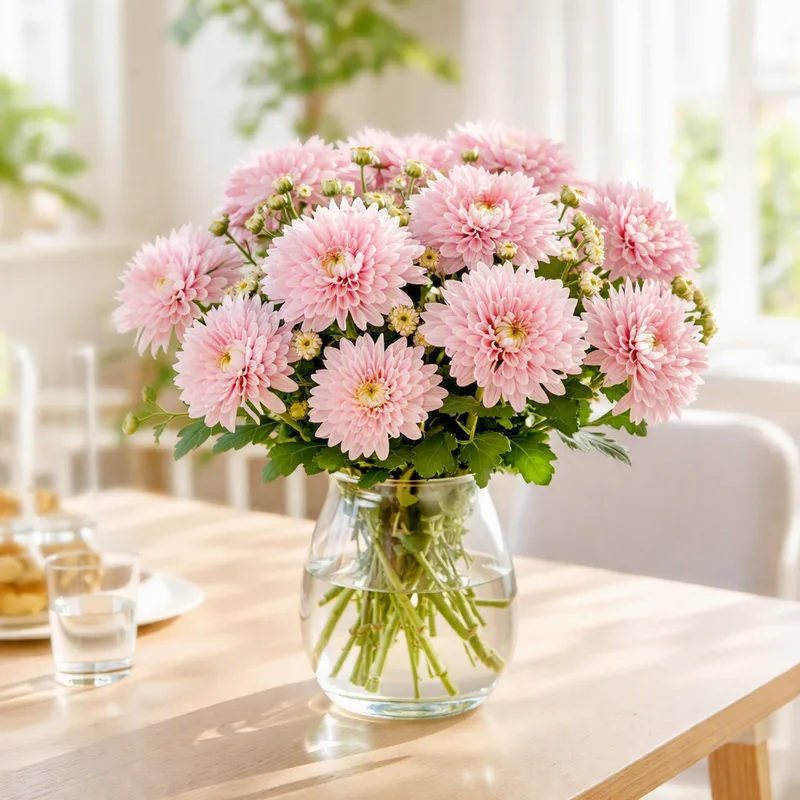
Making cut mums last
Strip leaves below the waterline, recut the stems on an angle and use clean water. Good stems last ten to fourteen days.
Mums and pets
On the ASPCA's list, chrysanthemum is toxic to dogs, cats and horses. Pyrethrins and sesquiterpene lactones can cause vomiting, diarrhoea, drooling, loss of coordination and skin irritation. If an animal has chewed a stem, call your vet.