
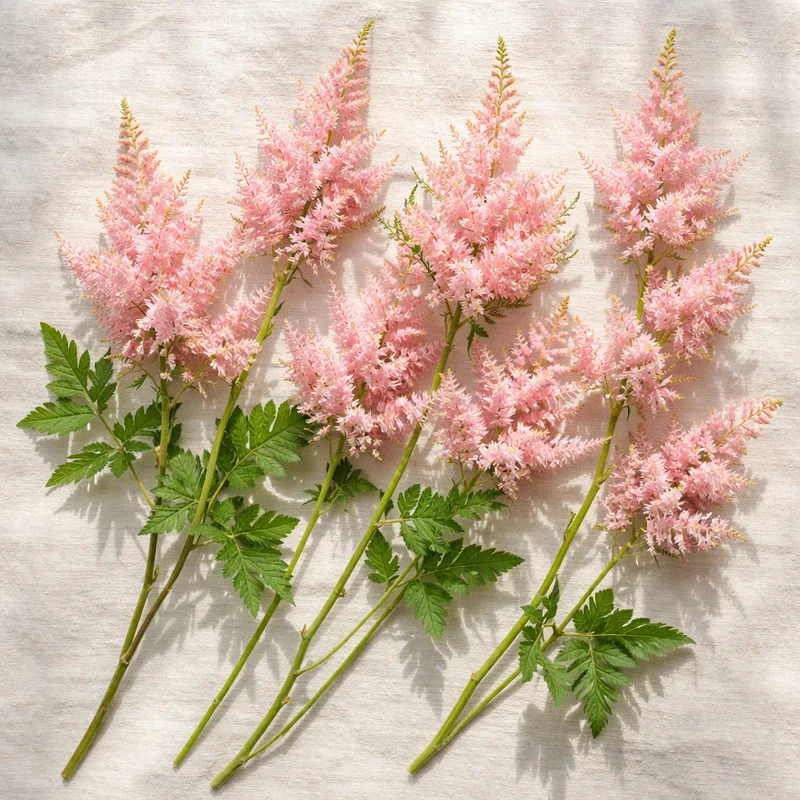
Peach, rose and lilac-pink
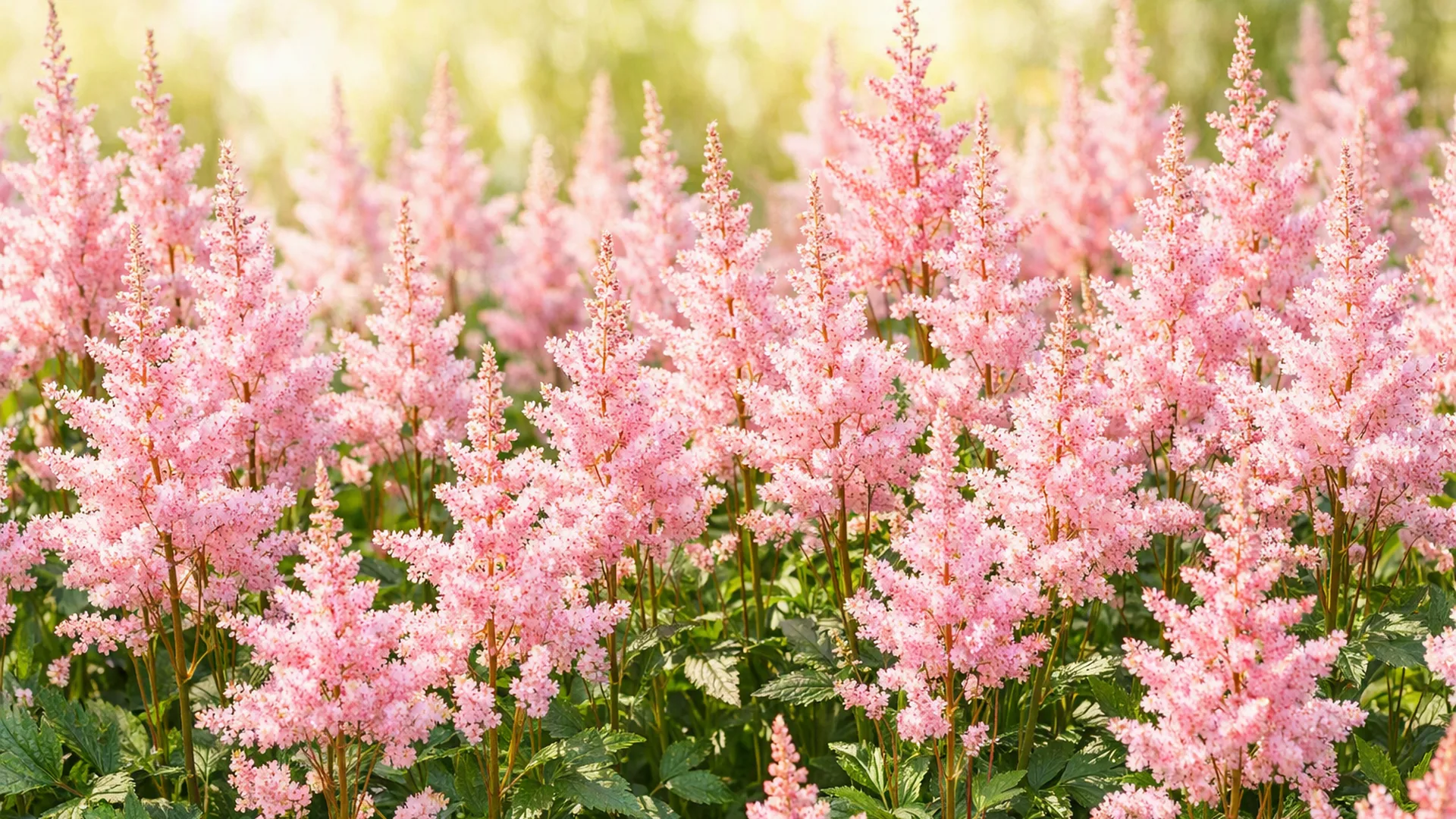
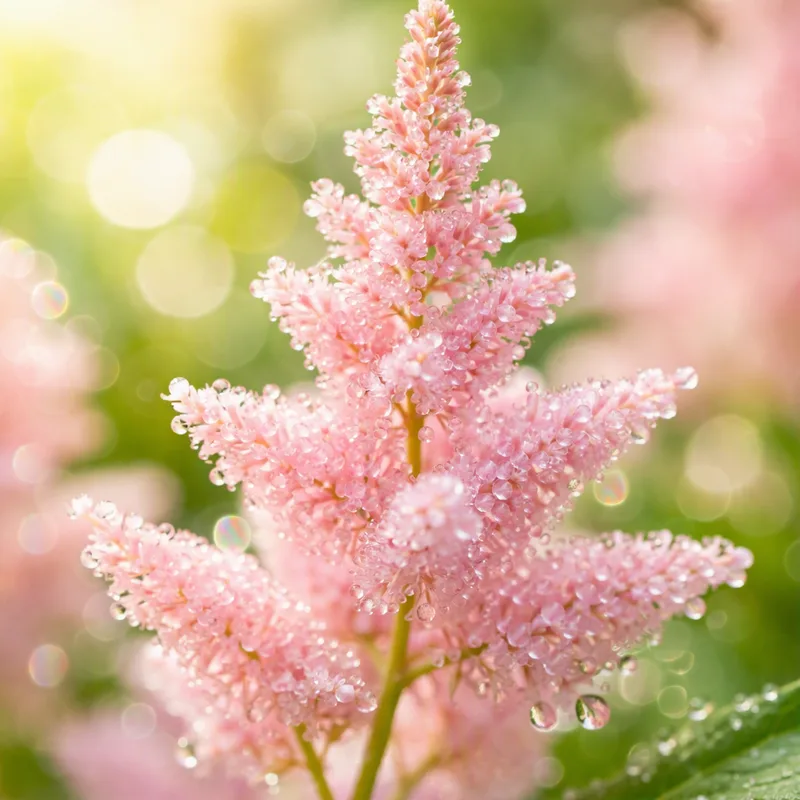
Pink is the colour most people associate with astilbe. The shades run from pale shell pink through peach to strong rose. A well-known soft pink is the cultivar 'Peach Blossom', and the lilac-pink 'Visions' belongs to a shorter group.
In bouquets
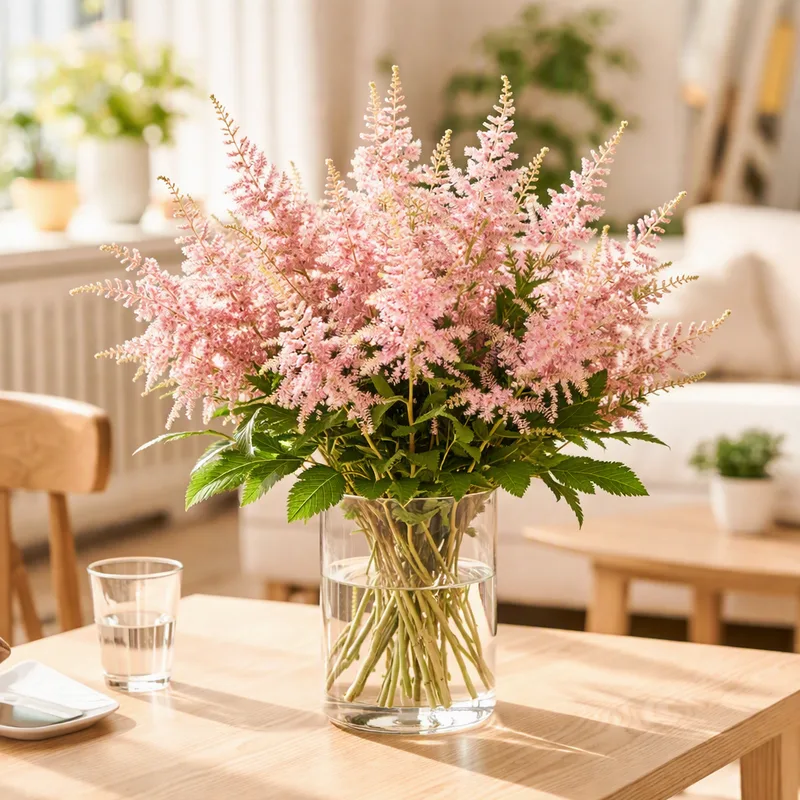
Astilbe adds airy texture to bouquets and country-style arrangements. Searches for astilbe flower bouquets are likely to be about wedding or gift flowers. Stems usually last five to eight days, and they do best if cut once the plume is mostly open and conditioned in cool water.
Growing pink astilbe
- Choose partial shade and keep the soil damp.
- Mulch each spring to hold moisture.
- Add compost at planting time.
- Plant in winter or early spring, once the weather is cool.
Matching to climate
Pink astilbe suits Tasmania, the Victorian highlands and the Blue Mountains. It can work in a protected Canberra bed with irrigation, though frost kills the top growth in winter. Brisbane and Perth need heavy shade and consistent water, and even then the plants may not be long-lived.
Pink plumes and animals
The ASPCA toxic plant pages we checked have no entry for astilbe, but a large meal of any plant can upset an animal.
A few extra tips help pink astilbe in the vase and the garden. Cut stems early in the day, then stand them in cool water for several hours before arranging. Hang a few plumes upside down in a dry, shaded place if you want dried stems for winter. In the garden, a seasonal feed of compost or well-rotted manure is better than strong fertiliser, which tends to burn the shallow roots.