
What counts as a white gerbera
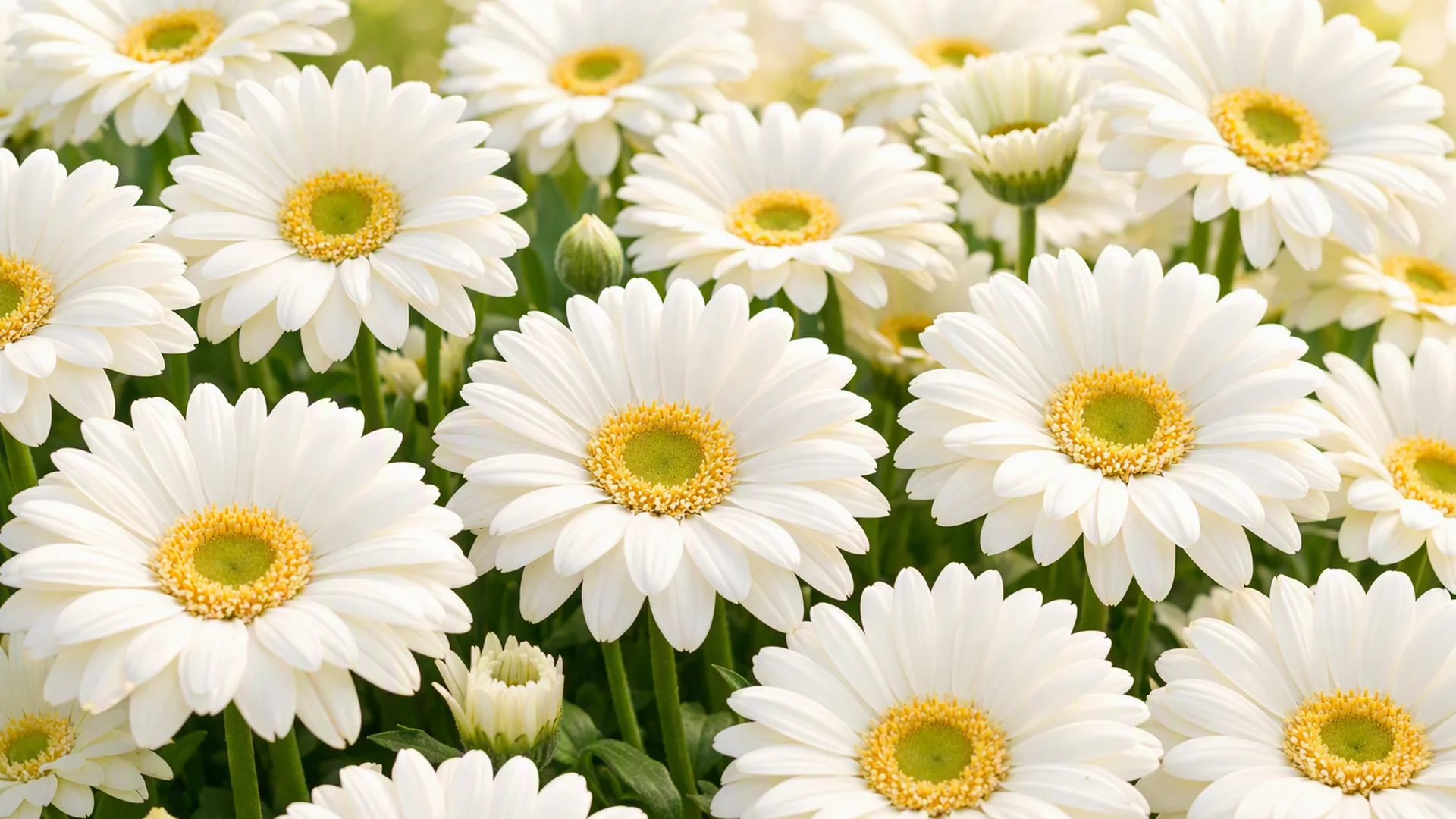
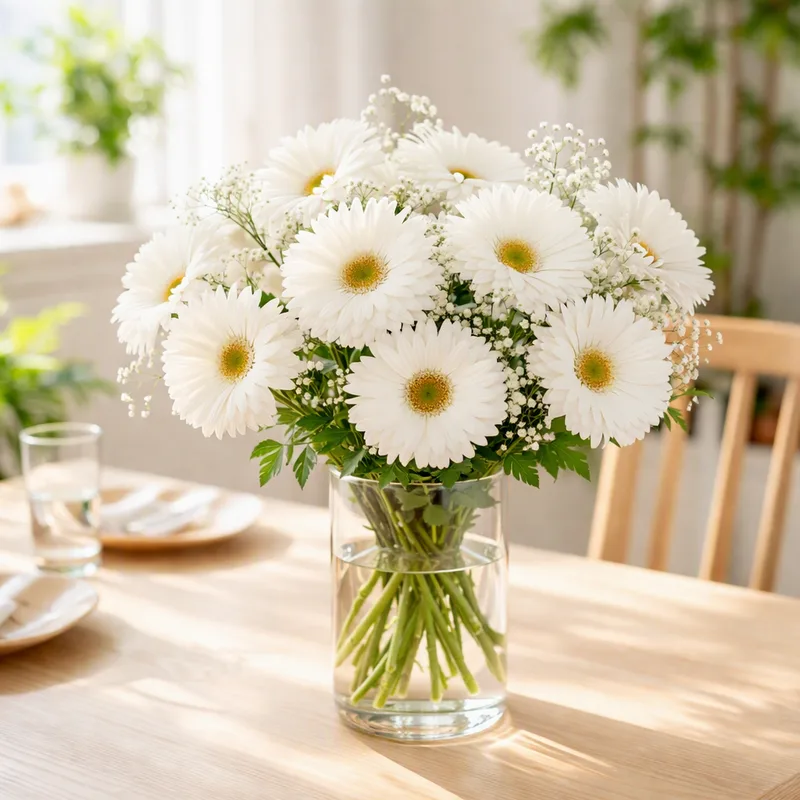
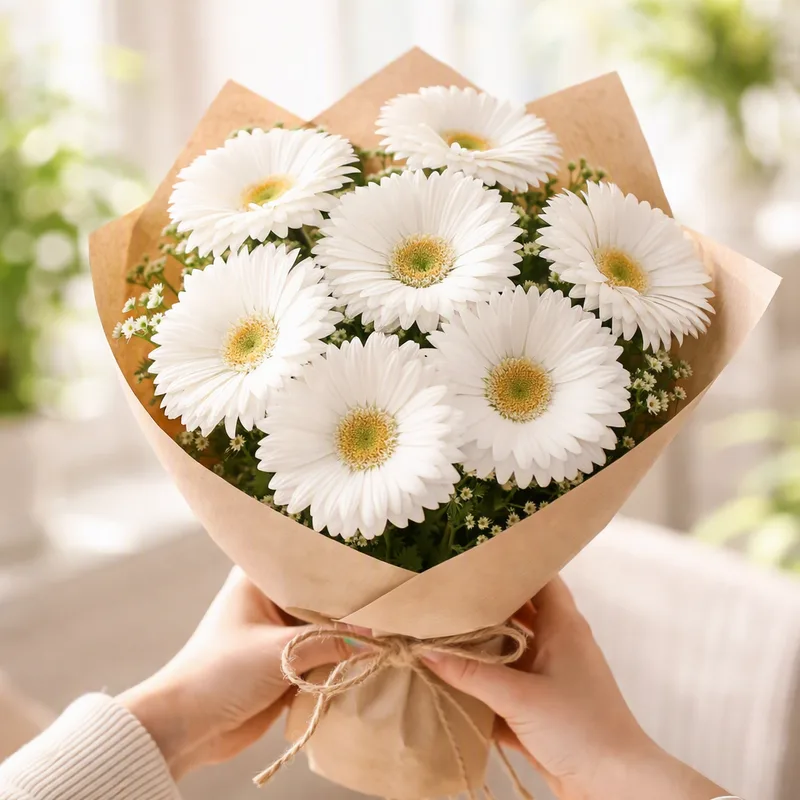
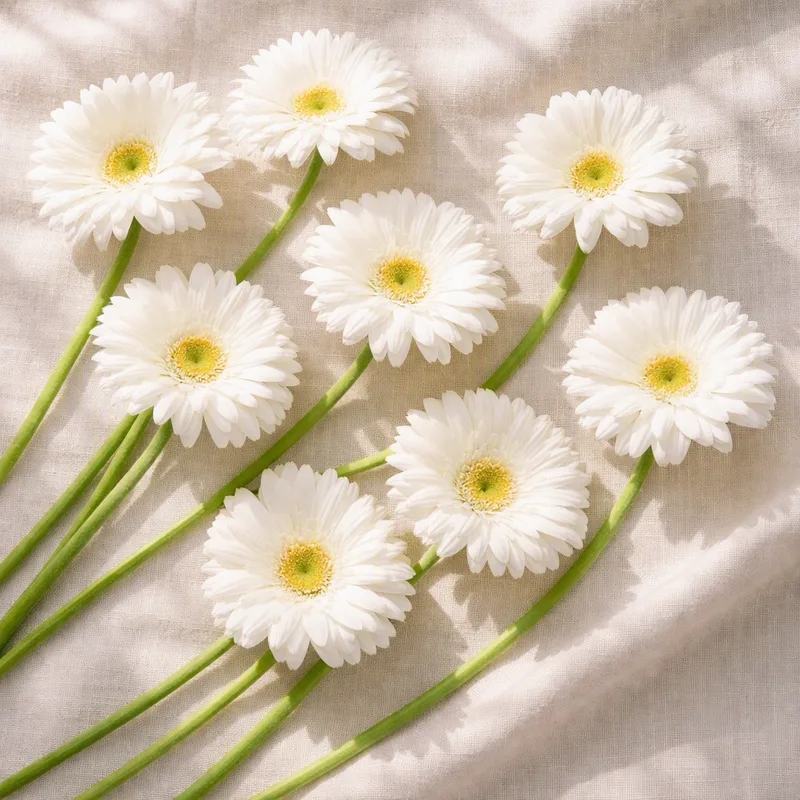
True snow white is uncommon in the genus. Many "white" gerberas have a pale cream or faintly green heart, and a few have a slight blush on the outer petals. The centre is often dark green or near black, which gives white varieties a high-contrast look that sets them apart from the soft, creamy appearance of white roses. Searches for a white gerbera plant usually mean the same garden perennial that sells as a cut flower, so everything below applies to both.
Where white fits
White is the quiet end of the gerbera range. It is used a lot in weddings, christenings and in sympathy arrangements, and in the language of flowers a daisy stands for innocence and cheer. White also takes up other colours well, so a few stems in a vase of mixed flowers lift the whole bunch.
Keeping the head standing straight
White petals show browning and water marks faster than any other colour, so clean handling matters:
- Strip any leaves that would sit under the waterline.
- Fill the vase with only a few centimetres of cool water, changing it daily in a Queensland or Northern Territory summer.
- Handle stems low down and avoid touching the petals, which bruise easily.
- Take out a bloom as soon as the outer petals go limp, since a fading head hurries the rest.
Growing white in the garden
A white gerbera plant forms a tight rosette of lobed leaves and sends up single, leafless flower stalks. It is a good choice for a pot on a patio, set in a free-draining mix with the crown just clear of the soil. Water in the morning, feed lightly in spring and summer with a balanced fertiliser, and remove spent stalks at the base. White flowers look best against dark foliage, and in a shady courtyard they brighten the corner even in late afternoon.
Gerberas and household animals
Gerberas are listed by the ASPCA as non-toxic to cats and dogs.