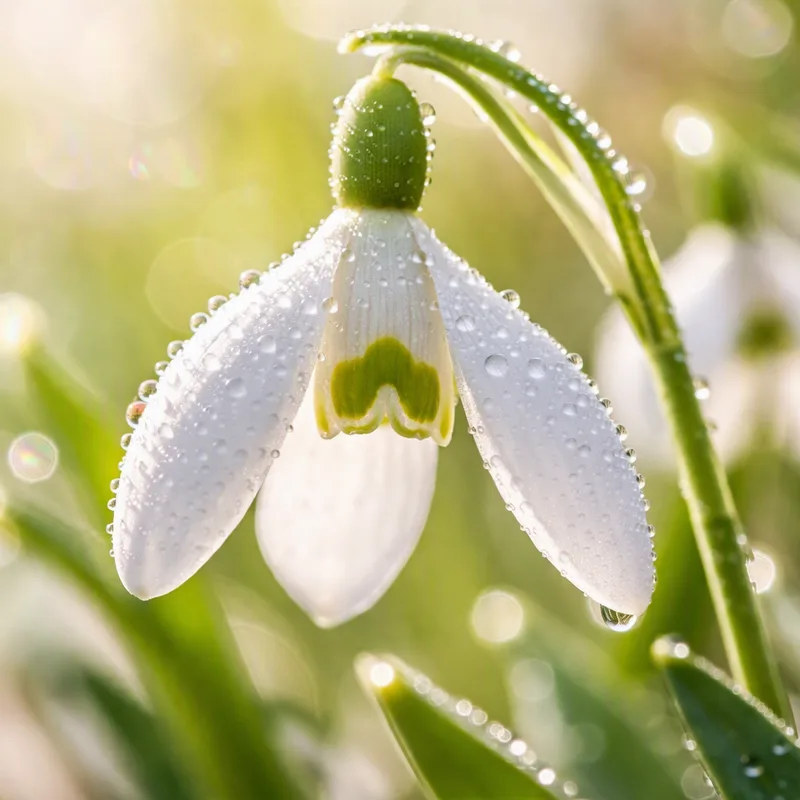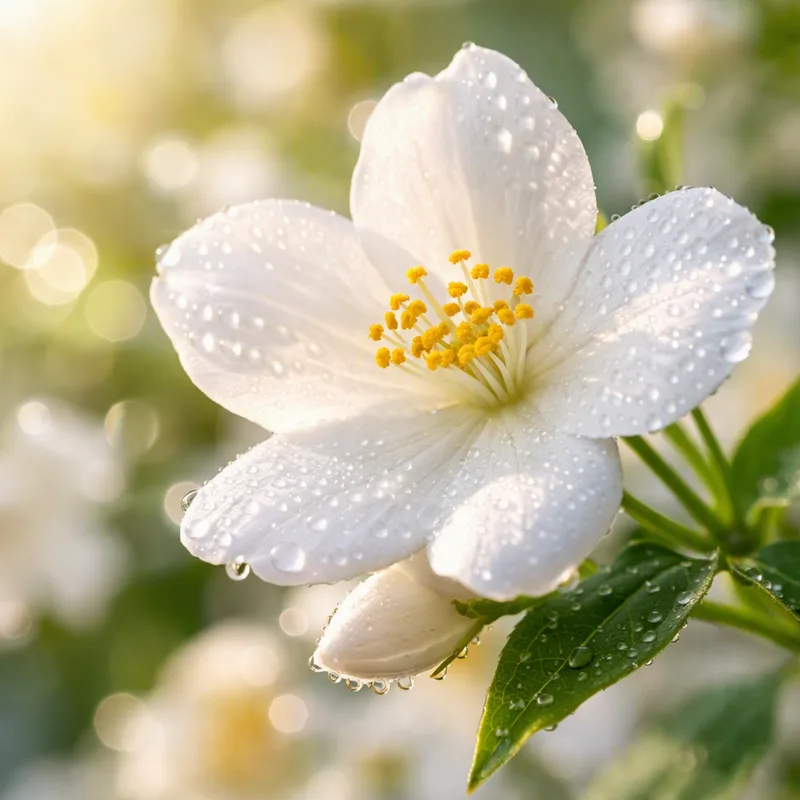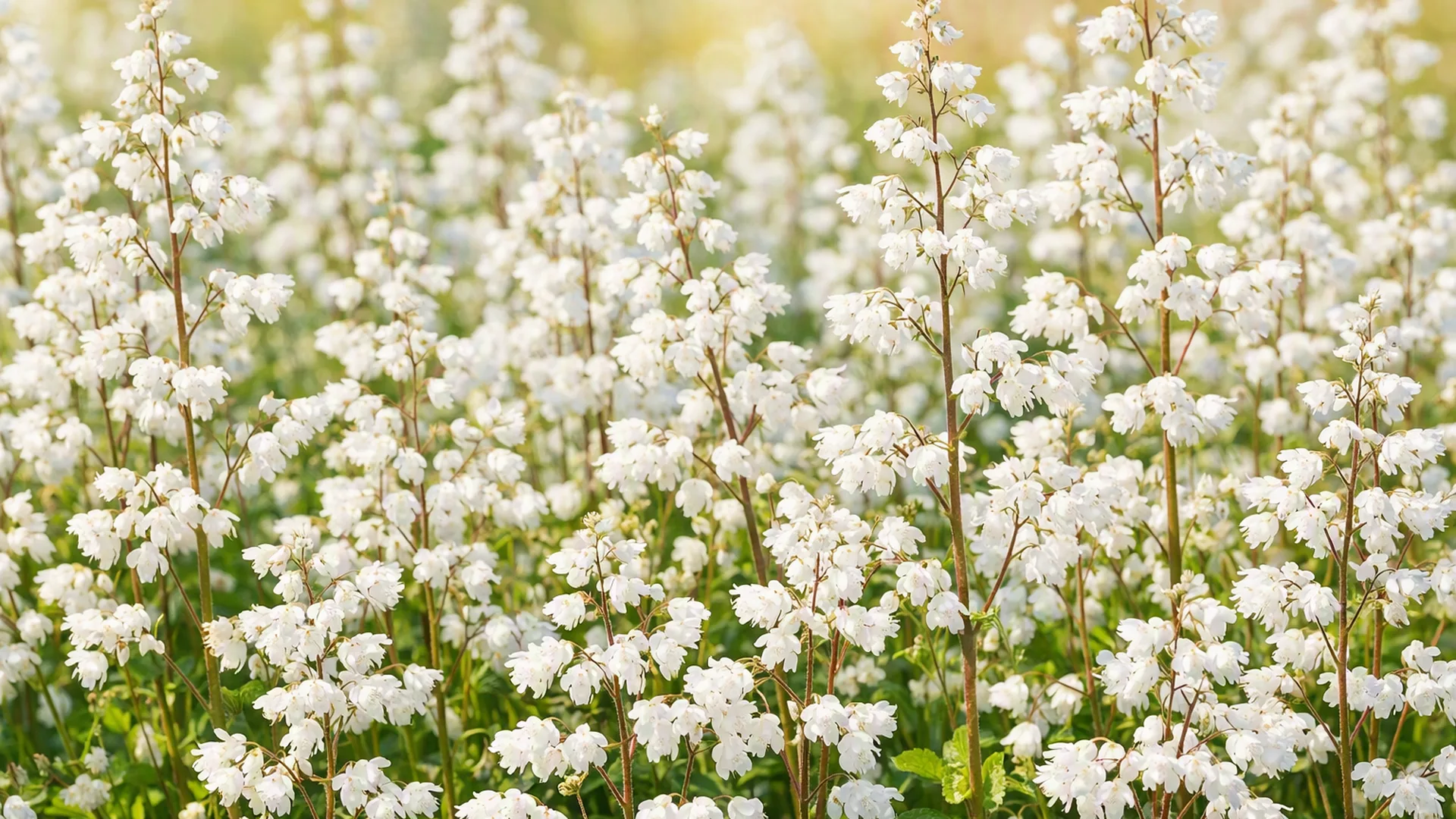

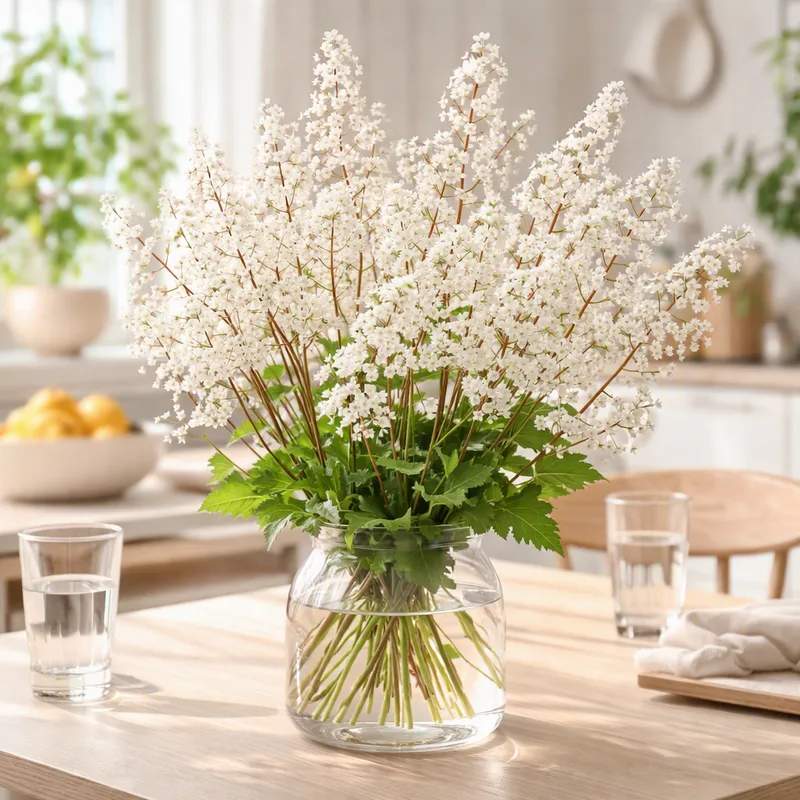

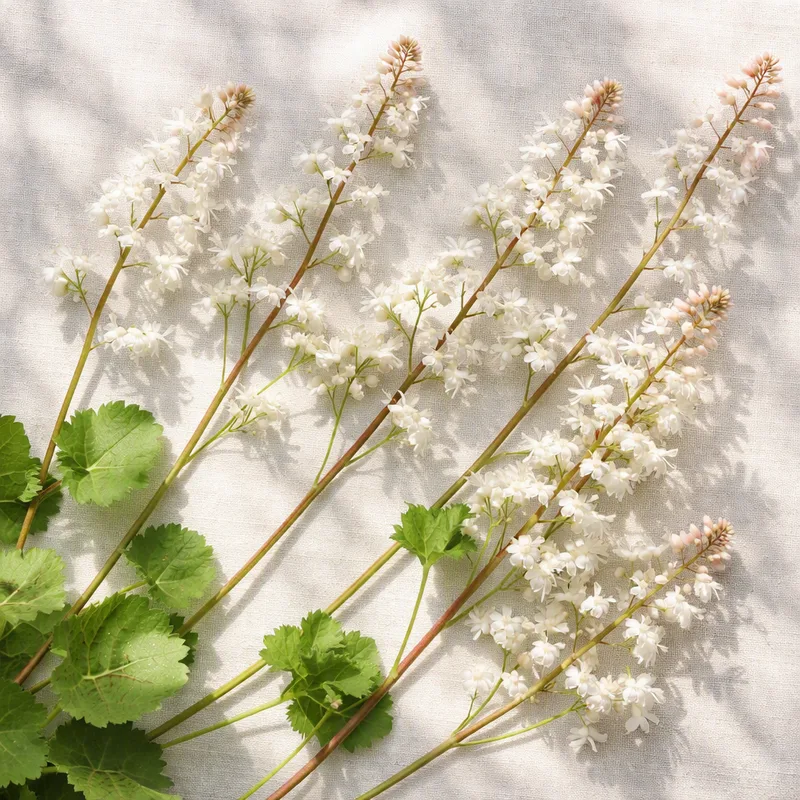
In coral bells, white can mean two things. Some varieties have spikes of cream or white bell flowers, while others have silver-marbled or pale frosted leaves that glow in dim corners. Both help lighten a shady garden bed.
Pale leaves and flowers
- White flower forms send up airy sprays in late spring and early summer, from about October to December.
- Silver-leaved forms keep the pale effect all year, with darker veins and a metallic sheen.
- Their foliage can scorch in direct afternoon sun, so shelter them from it.
Neighbours that flatter them
Heuchera work with ferns, hostas, hellebores and white impatiens in a shady border. In cool gardens, pair the silver leaf types with deep burgundy foliage for contrast. In a pot, combine one plant with trailing ivy or violas.
Keeping pale leaves crisp
Pale leaves show damage. Remove brown or tatty leaves, avoid wet foliage in the evening and water at the base. Good airflow stops fungal spotting in humid weather. Hard frost is rare for most Australian gardens, but in cold Tasmania, a layer of mulch will protect the crown.
Cold-season looks
Many selections stay evergreen in mild districts. In colder places, expect some leaf loss and a flush of new growth in spring.
A dog-friendly shade plant
Coral bells are non-toxic to dogs, cats and horses according to the ASPCA, so the plant is a safe pick around the family pet.