
The tough one in the bucket
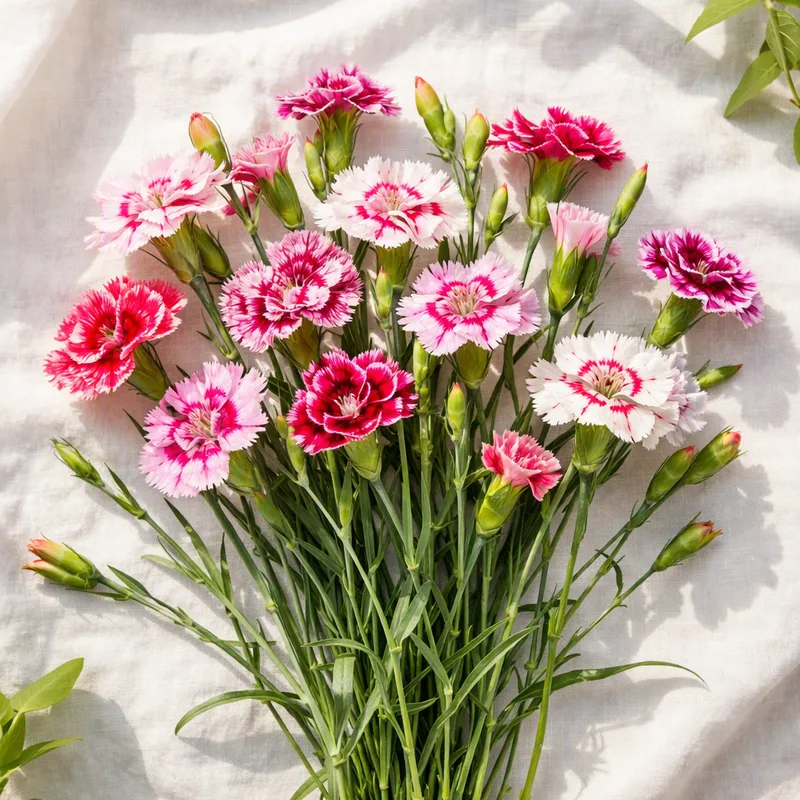
Dianthus caryophyllus is a Mediterranean plant that people have grown for so long its exact wild range is uncertain. The name comes from Greek words meaning divine flower, and the spicy, clove-like scent explains the old nickname clove pink. What makes it a favourite with florists is stamina: cut stems often look fresh for a fortnight or more.
- A standard carnation bears a single large, ruffled bloom.
- Spray carnations carry several smaller buds, which suits posies.
- Garden pinks are low, scented and fussier about drainage than their long-stemmed cousins.
Colours, and a few that do not exist
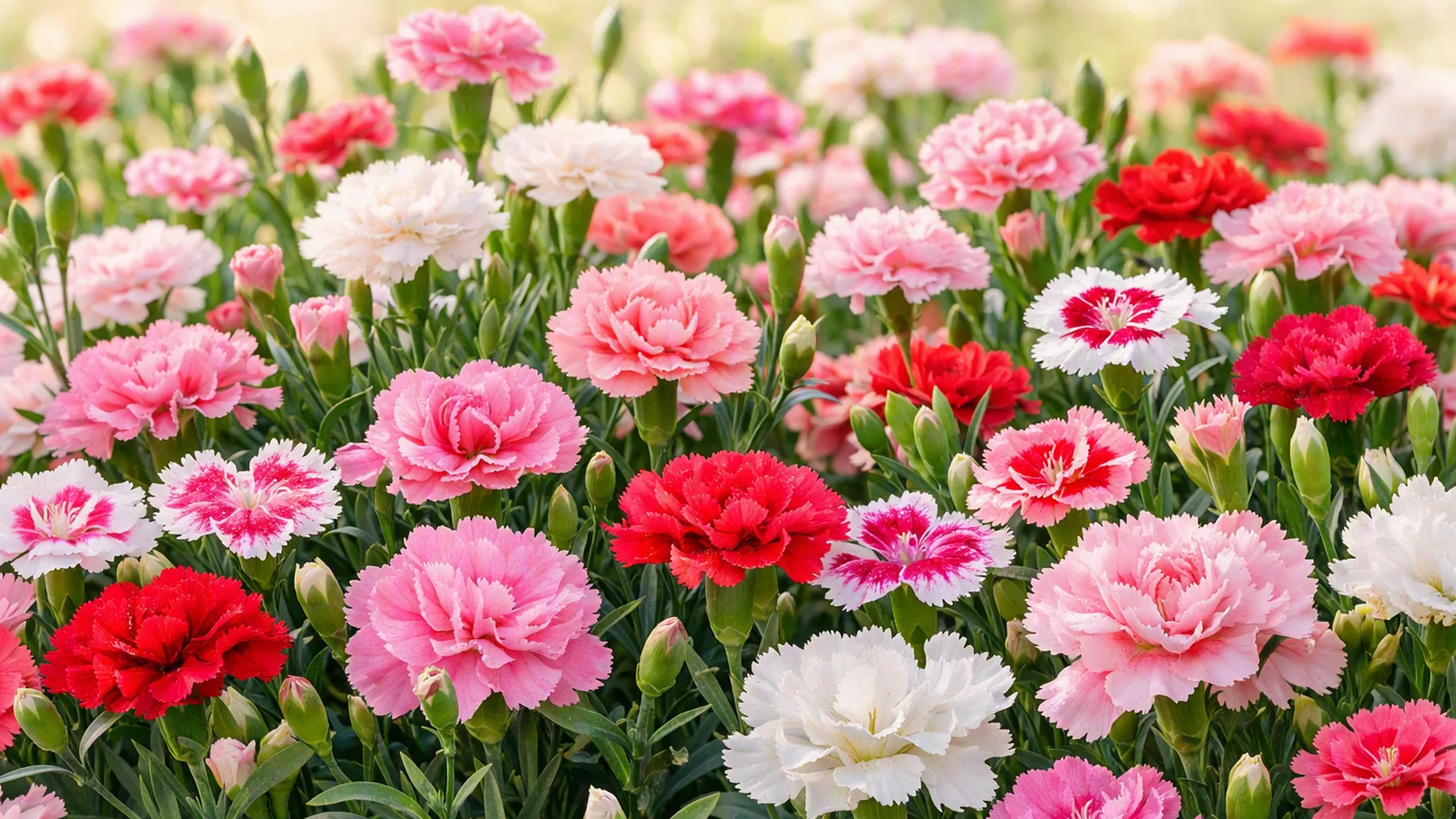
Carnations come in white, cream, pink, red, yellow, orange, purple and striped forms. People search for a black carnation, but what exists is a very dark maroon. Blue and green carnations are produced by dyeing white flowers, which take up colour through the stem.
Looking after them in warm weather
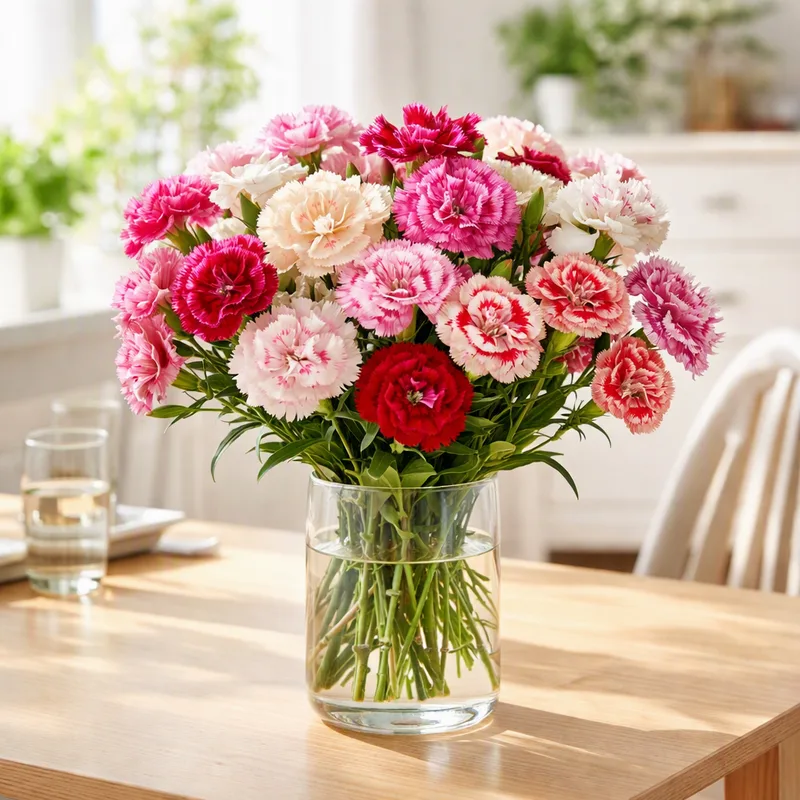
Australian summers are hard on any cut flower, so a few habits help. Recut stems at an angle just above a joint, use clean water, and keep the vase clear of the fruit bowl, since ripening fruit releases ethylene, which ages carnations fast. A cool room beats a sunny sill.
In the garden, Dianthus likes full sun, sharp drainage and neutral to slightly alkaline soil. That makes it a natural fit for Adelaide and Perth, where summers are dry. In humid Brisbane or Darwin, it tends to struggle with fungal disease, so grow it in pots with plenty of airflow.
A note for pet owners
The ASPCA flags carnation for dogs, cats and horses, though it describes the effects as mild: some tummy upset and occasional skin irritation. Call a vet if your pet has eaten more than a nibble.